
Verifi CDRN vs. Ethoca Alerts, What Each One Catches Best and When to Use Both
Jan 29, 2026
If chargebacks feel like a leak you can’t quite find, alerts can be the flashlight. Verifi CDRN vs Ethoca is one of the most common comparisons merchants make because these two programs often catch disputes early enough to refund and stop a chargeback from ever landing.
But they don’t always catch the same disputes, they don’t always arrive with the same details, and they don’t always fit the same business model. The real win is knowing what each one tends to do best, then deciding if using both will pay off for your team.
What chargeback alerts really do (and what they don’t)
Chargeback alerts are early warnings sent when a cardholder contacts their bank about a transaction. Instead of waiting for a formal chargeback, the merchant gets a short window to respond, usually by issuing a refund. Think of it like getting a “smoke alarm” before the fire department shows up.
Alerts work best for disputes caused by confusion and friction, like:
Unrecognized billing descriptor: The customer doesn’t connect your company name to the purchase.
Late delivery or cancellation timing: The customer is impatient and calls the bank first.
Subscription surprises: A renewal hits and the customer claims they didn’t authorize it.
Alerts are not magic, though. If it’s clear fraud, the issuer may still charge back. And if your support and refund process is slow, an alert can expire before you act.
Here’s the practical snapshot most merchants care about:
| Area | Verifi CDRN | Ethoca Alerts |
|---|---|---|
| Strongest network coverage | Often strongest on Visa disputes | Often strongest on Mastercard disputes |
| Typical response window (varies by issuer) | Reported as longer in many guides (often up to 72 hours) | Reported as shorter in many guides (often around 24 hours) |
| What you’re trying to do | Refund in time to prevent a chargeback | Refund in time to prevent a chargeback |
If you want a third-party breakdown of how merchants compare them, see Ethoca vs Verifi CDRN comparison and RDR, Ethoca, and Verifi CDRN explained.
Verifi CDRN: what it tends to catch best
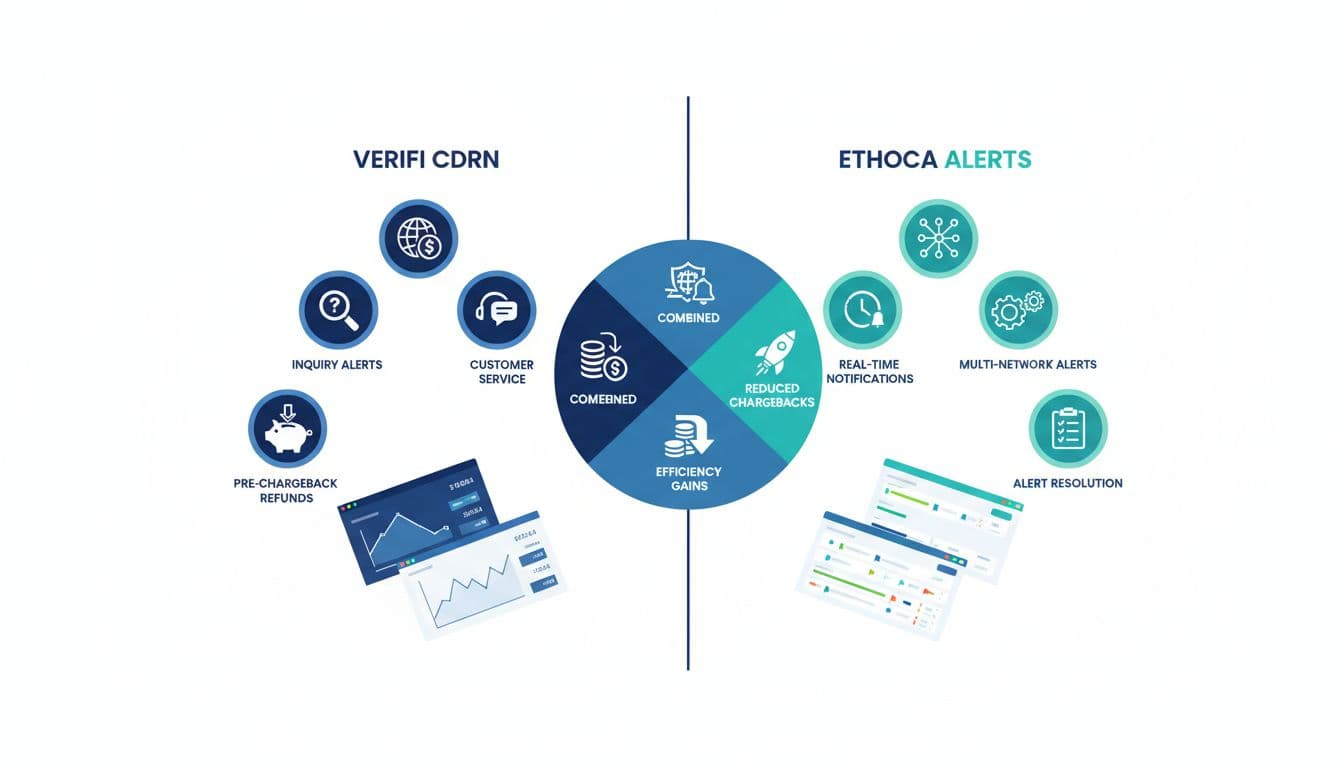
CDRN (Cardholder Dispute Resolution Network) is tied closely to Visa’s dispute ecosystem. In practice, it’s most valuable when a large share of your revenue runs on Visa cards, or your customer base is heavily US-based (a common pattern called out in several industry guides).
CDRN also tends to be strong when your team needs clearer transaction tracing. Some sources note that CDRN alerts can include identifiers like an Acquirer Reference Number (ARN), which can help payment ops teams quickly locate the exact transaction in processor logs.
CDRN is often a fit when:
- Your Visa volume is high, and you want early visibility into bank contacts.
- You have recurring billing, where “I don’t recognize this” disputes pop up.
- You can refund fast, especially for low-margin items where fighting is pointless.
A subtle advantage is timing. Many merchant resources describe CDRN as allowing a longer response window than Ethoca in some cases. That doesn’t mean you should wait. It means you’re less likely to lose an alert just because it arrived overnight.
If you want another merchant-focused explanation of what shows up in alerts and how they differ, Chargeback alerts guide to Verifi and Ethoca is a helpful reference.
Ethoca Alerts: what it tends to catch best

Ethoca is commonly associated with Mastercard’s ecosystem and is often described as having broad international reach. If you sell cross-border, or you see a meaningful share of disputes on Mastercard rails, Ethoca Alerts usually earn a spot in your stack.
Speed is the trade-off. Many comparisons describe Ethoca as having a shorter window to act than CDRN (often cited around 24 hours). That can be great for stopping disputes quickly, but it also exposes weak ops. If your team only checks disputes once per day, you may miss saves.
Ethoca tends to shine when:
You sell internationally: More banks and issuers in more regions can mean more “first-contact” signals.
Fraud patterns are strong: Some writeups tie Ethoca’s issuer relationships to better fraud-related visibility.
You want fast closure: Quick alerts can stop a chargeback before it becomes a workflow headache.
Some sources also mention Ethoca alerts may include different customer details (for example, customer name fields). That can speed up matching when your internal order data is messy.
For another viewpoint on whether merchants should run one or both, do you need both Ethoca and Verifi? lays out common decision points.
When to use both, and how to avoid paying twice
Using both is usually about coverage. If your card mix is close to 50/50 Visa and Mastercard, relying on one program can feel like fishing with half a net. Running both can raise the number of disputes you see early, which can lower your chargeback count and protect your ratio.
The catch is cost and overlap. The same underlying dispute can sometimes trigger alerts through different paths, and you could pay for two alerts that lead to one refund. That’s why “use both” only works when you also fix operations.
A practical playbook looks like this:
Set refund rules upfront: Decide which orders get auto-refunded versus reviewed (high AOV, digital goods, repeat customer, prior fraud flags).
Track save rate by program: If one source rarely converts to prevented chargebacks, pause it.
Reduce duplicate matching issues: Align billing descriptors and customer support metadata so alerts match cleanly.
This is where a platform matters. Chargebase is a chargeback prevention and recovery platform for e-commerce and SaaS businesses, and an official partner of both Ethoca and Verifi. It connects to your payment provider quickly (often in minutes), flags risk before disputes become chargebacks, and sends real-time alerts when they can actually help.
Chargebase also uses simple pay-per-alert pricing, so you don’t lock into a big contract. From Chargebase’s published pricing, CDRN alerts can be $15 per alert with up to a 12-hour enrollment time, and Ethoca can be $25 per alert with up to a 12-hour enrollment time (with manual and optional auto-refund flows depending on setup). If you want deeper automation, Chargebase also supports Visa Rapid Dispute Resolution (RDR) at $15 per alert (typically longer enrollment, and auto-refund only), plus 10+ automation rules to control outcomes.
For a broader comparison that includes the “do you need both?” question and cost considerations, Ethoca vs Verifi alerts is another useful read.
Conclusion
Verifi CDRN vs Ethoca isn’t a battle, it’s a coverage decision. CDRN often fits Visa-heavy merchants who want solid dispute visibility and more breathing room, while Ethoca often fits Mastercard-heavy and international sellers who need quick signals and fast action. Using both can make sense when your card mix is balanced, but only if your refund rules and workflows are tight. If you want fewer chargebacks without adding busywork, Chargebase gives you one place to connect alerts, automate decisions, and pay only when an alert is delivered.
You might also want to read
Chargeback Management & Software Overview
Dec 31, 2025
Chargeback Analytics & Reporting
Jan 02, 2026
Chargeback Management & Software Overview
Jan 13, 2026
Chargeback Prevention & Fraud Reduction
Jan 26, 2026