
How to Calculate Chargeback Alert ROI for Ecommerce Stores
Apr 20, 2026
Chargeback alerts look cheap or expensive only when you use the wrong math. For an ecommerce store, the real question is simple: what did the alert help you avoid?
That is why chargeback alert ROI matters. If you measure only the alert fee, you miss labor, dispute fees, saved inventory, and the effect on your chargeback ratio. The numbers get clearer once you compare the alert path with the formal chargeback path.
What chargeback alert ROI actually measures
Chargeback alert ROI is the value you gain when an early alert stops a formal dispute. It is not the same as chargeback recovery. You are measuring prevention, not a later win.
If you need a quick refresher on what chargebacks are, start there. A chargeback pulls money back through the issuer, and it often adds extra fees and admin work. By contrast, an alert gives you a short window to act before the dispute hardens into a network chargeback.
Many alert programs send that notice within hours, and the response window is often tight. A good merchant guide to chargeback alert tools explains why speed matters so much. Chargebase’s own guide to chargeback alert response windows shows the same pattern: if your team refunds, stops shipment, or cuts off access in time, the case may never become a formal chargeback.

That difference matters because the true cost of a chargeback is rarely just the order amount. The true cost of chargebacks usually includes fees, staff time, lost goods, shipping, and sometimes extra processor pressure. In other words, a $15 or $25 alert can save far more than its face value.
There is one catch. If you refund an order after delivery, you probably still lose the sale. So you should not count the full order value as “saved” unless the alert let you stop shipment, cancel service access, or avoid another loss you would have taken in the chargeback path.
The formula for calculating chargeback alert ROI
The cleanest formula is:
Chargeback alert ROI = (avoided chargeback cost – alert program cost) / alert program cost x 100
The key is defining “avoided chargeback cost” the right way. You are measuring the gap between two outcomes: what a formal chargeback would have cost, and what the alert resolution actually cost.
This quick table keeps the inputs honest:
| Input | What to include |
|---|---|
| Prevented chargebacks | Alerts resolved in time that likely would have turned into disputes |
| Cost per chargeback avoided | Dispute fee, labor, representment time, saved goods, saved shipping |
| Alert program cost | Per-alert fees, tool cost, alert-only labor |
| Alert resolution cost | Refund handling, cancellation work, any extra support time |
Count the value an alert saves beyond a normal refund. If the sale was already lost either way, do not count it twice.
Now use a simple example. Say your store receives 100 alerts in a month. You resolve 70 in time, and those 70 would likely have become chargebacks. Your average avoided cost per case is $85. That might include a $20 dispute fee, $25 in team time, $20 in saved inventory or shipping, and $20 in other admin expense.
So your avoided cost is:
70 x $85 = $5,950
Next, calculate alert cost. If those alerts came through a $15 program such as RDR or CDRN, your alert spend is:
100 x $15 = $1,500
Add $200 in alert-only handling time, and your total program cost is:
$1,700
Your ROI becomes:
($5,950 – $1,700) / $1,700 x 100 = 250%
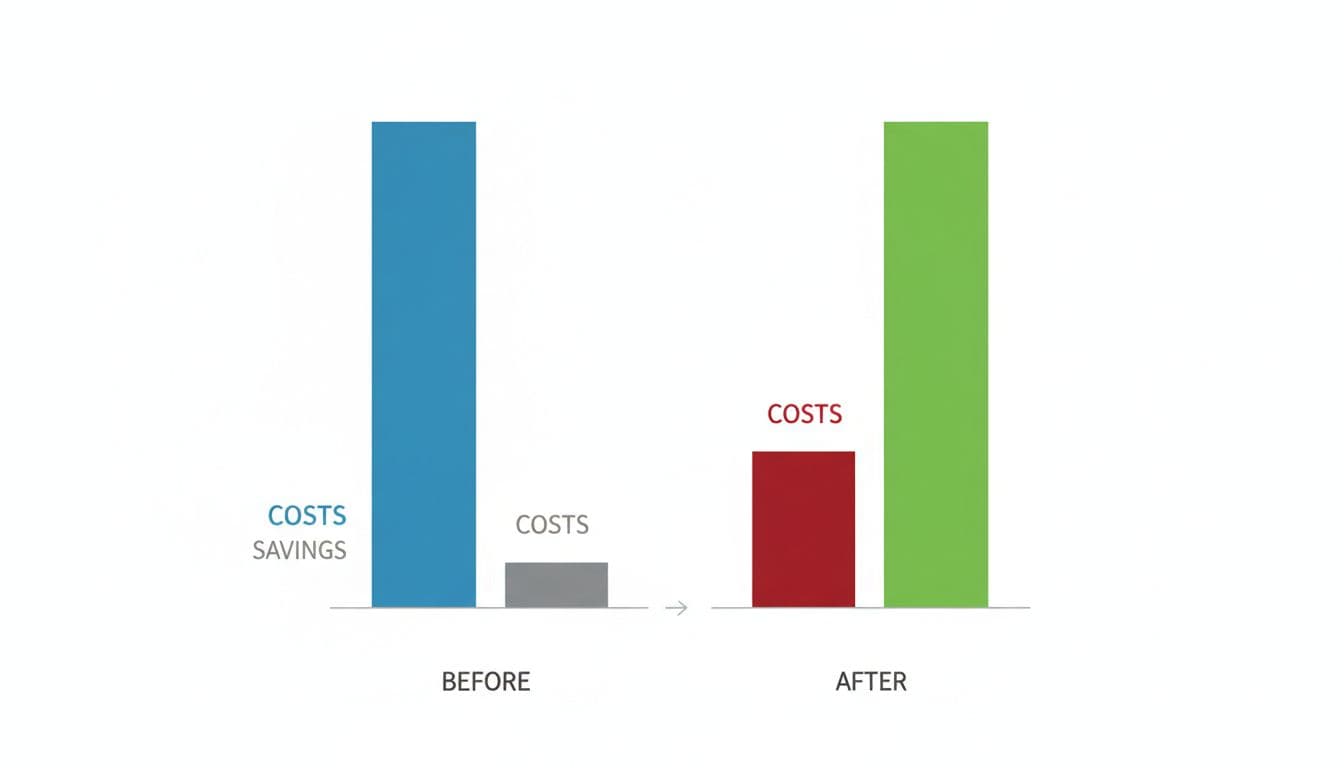
That is a healthy return, but only because the store used real inputs. If only 40 alerts truly prevented chargebacks, the ROI would fall fast. If the team can stop shipments before they go out, the ROI rises. A good model uses your own data by network, reason code, and product type. Broad averages hide the truth.
What changes the ROI most, and where Chargebase fits
Three things move chargeback alert ROI more than anything else: response speed, routing rules, and case mix. Fast action matters because alerts expire. Clear rules matter because low-value fraud claims may deserve an auto-refund, while higher-ticket orders may need review. Case mix matters because subscription confusion, shipping issues, and friendly fraud do not produce the same savings.
That is also why merchants track more than one metric. Watch alert volume, acceptance rate, average time to action, and the share of alerts that still become disputes. Stores that want to keep chargeback rates low usually review results by product line and payment source, not only by total count. Wider ecommerce examples, such as these Shopify chargeback ROI examples, reach the same conclusion: one blanket rule wastes money.
Chargebase fits this part of the problem well. It is chargeback prevention software built for ecommerce and SaaS businesses, and it can help most companies reduce chargebacks before they become formal disputes. The platform connects to a payment provider with a no-code setup, then automates the workflow with configurable rules and real-time alerts. It supports alert and prevention programs such as RDR, CDRN, and Ethoca’s role in chargeback prevention.
Its pricing model also makes ROI easier to track. Chargebase uses pay-per-alert pricing, with published examples such as $15 for RDR or CDRN alerts and $25 for Ethoca alerts. Because the spend is tied to alert volume, you can compare cost and savings month by month without much guesswork.
A chargeback alert is not valuable because it arrives early. It is valuable when the early notice changes the outcome.
That is the core of chargeback alert ROI. Measure the cost gap between a formal dispute and an alert resolution, then track that gap by network, order type, and rule. When that math is clean, the best alert program is usually obvious.
You might also want to read
Chargeback Management & Software Overview
Dec 31, 2025
Chargeback Analytics & Reporting
Jan 02, 2026
Chargeback Management & Software Overview
Jan 13, 2026
Chargeback Prevention & Fraud Reduction
Jan 26, 2026