
How to Get Off a Chargeback Monitoring Program
May 03, 2026
A chargeback monitoring program can squeeze margin fast. Fees rise, processors get nervous, and each new dispute makes next month harder.
The good news is that merchants do get out. The path is usually simple on paper: reduce dispute volume, lower your chargeback ratio, and keep both down long enough for the card network and your acquirer to clear you.
That takes more than fighting old cases. You need to fix why customers are going to their bank in the first place to stabilize your payment processing environment.
Key Takeaways
- Chargeback monitoring programs track your dispute ratio against sales volume; exceeding thresholds like Visa’s 0.9% triggers fees, reserves, and potential account closure—exit requires consecutive compliant months below limits.
- Focus on root cause analysis by sorting disputes by reason code, traffic source, and customer journey to fix billing confusion, support delays, and fraud gaps rather than just fighting old cases.
- Meet your acquirer with a written remediation plan, implement quick wins like better descriptors and refunds, review weekly, and cut high-risk traffic if needed for faster ratio drops.
- Use prevention software like Chargebase, Ethoca, or Verifi to stop disputes pre-chargeback via alerts and automations, combining internal fixes with tools for sustained low ratios.
What being in a monitoring program means for your business
Card networks like Visa and Mastercard track dispute activity by merchant ID. They look at two things: how many chargebacks you get, and how that number compares with your sales volume. If you cross a network limit, your acquirer gets notified, and the pressure starts.
That pressure can show up as monthly assessments, tighter reviews, reserve demands, or stricter processing terms. If the trend doesn’t improve, some merchants face volume caps or account closure. That’s why these programs matter. They are not a bookkeeping issue. They are a Visa Acquirer Monitoring Program (VAMP) issue.
If you need a refresher on how disputes, often stemming from card-not-present transactions, move from inquiry to formal case, this overview of the chargeback lifecycle explained is helpful. For a network-level view, Chargebase also breaks down Visa and Mastercard chargeback monitoring programs in plain language.

A lot of merchants make the same mistake at this stage. They focus on winning chargebacks they already received, while new ones keep landing every day. That rarely works. A monitoring program is more like a smoke alarm than a fire report. You don’t solve it by arguing with the alarm. You solve it by putting out the source.
Know the thresholds and your exit target
Before you can leave the program, you need to know the line you’re trying to cross. Public guidance from processors and industry references points to the common 2026 chargeback ratio thresholds below (often expressed in basis points by networks, such as 90 basis points for a 0.9% ratio), although your acquirer is the final source for your exact status and exit rules.
| Program | Common trigger | Usual way out |
|---|---|---|
| Visa early warning | 0.65% chargeback ratio and 75 chargebacks | Get back under the limit and hold it there |
| Visa Dispute Monitoring Program | 0.9% chargeback ratio and 100 chargebacks | Stay compliant for multiple months and follow a fix plan |
| Visa excessive VDMP | 1.8% chargeback ratio and 1,000 chargebacks | Same pattern, but with much higher fines and scrutiny |
| Mastercard Excessive Chargeback Program | 1.5% chargeback ratio and 100 chargebacks | Often 3 straight months below threshold |
| High Excessive Chargeback Merchant | 3.0% chargeback ratio and 300 chargebacks | Also requires sustained improvement, with bigger penalties |
Public references such as Stripe’s documentation on dispute monitoring programs and Kount’s explanation of Visa’s program describe a consistent theme: you don’t exit because of one clean week. You exit after consecutive compliant months.
Visa-related monitoring also got tighter in 2026 under VAMP, which looks at fraud and dispute performance together in some markets. So if fraud attacks are pushing your disputes higher, you can’t ignore that side of the problem.
The fastest way out is steady performance, not a one-time cleanup.
This is why monthly reporting isn’t enough when you’re under monitoring. Track your chargeback ratio every week, and if volumes are high, track it daily. A merchant with 60,000 monthly transactions has more room to absorb disputes than a merchant with 3,000. The math gets harsh fast when your transaction count is low.
Find the real reason disputes are rising
Conduct a formal root cause analysis to uncover why disputes are rising. Most merchants under monitoring don’t have one single problem. They have two or three issues feeding each other.
Start by sorting disputes by reason code, product type, payment gateway, traffic source, country, subscription plan, and fulfillment method. Then read the customer journey behind the numbers. Did the buyer forget a renewal? Was the product delayed? Did the statement descriptor look unfamiliar? Was support slow? Did fraud screening let through orders that were always going to blow up, contributing to Excessive Fraud Merchant (EFM) program placement?
“Fraud” is often only part of the story. True fraud involves stolen credentials, while friendly fraud stems from customer confusion around unclear billing, hard-to-find cancellation links, duplicate charges, and late shipping, all of which can drive just as many disputes. For SaaS companies, failed renewal notices and messy downgrade flows are common trouble spots. For ecommerce brands, preorder delays and poor delivery communication can do real damage.
You also need to spot the segment with the highest fraud volume. Sometimes one affiliate source creates most of the pain. Sometimes one subscription offer has twice the dispute rate of everything else. In those cases, cutting or pausing that source can improve your ratio faster than anything else.
A tight root cause review usually leads to practical fixes:
- Optimize your statement descriptor to make it recognizable.
- Shorten refund approval time.
- Put cancellation where customers can find it.
- Send clear renewal reminders.
- Tighten fraud rules on high-risk orders.
These aren’t cosmetic changes. They directly reduce the number of cardholders who call the bank instead of your team.
Key steps to get out of the program faster
Once you know the cause, move fast. Most acquirers want to see a real remediation plan, not vague promises.
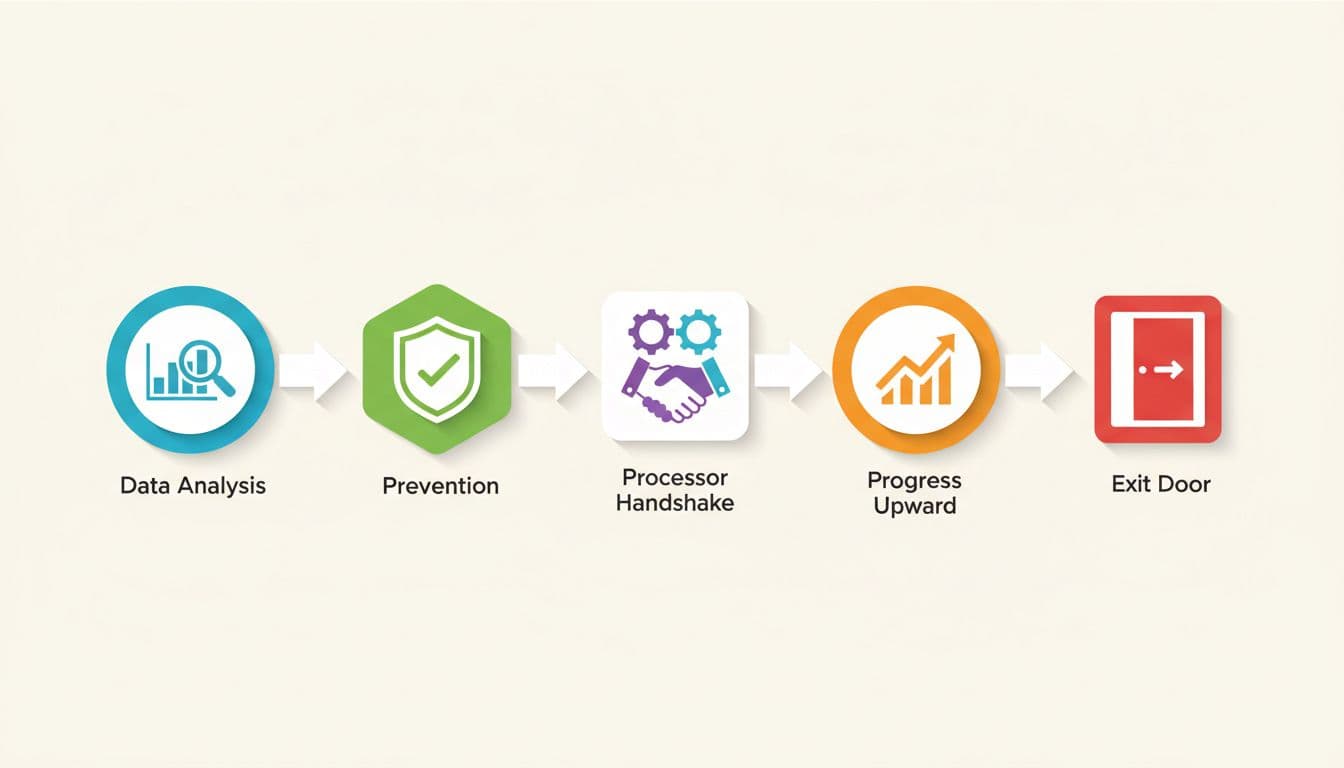
- Meet with your acquirer and processor right away. Make your remediation plan the focal point by sharing the data, the cause analysis, and the changes you can deploy this month.
- Put the plan in writing. Include target ratios, dates, owners, product changes, fraud changes like implementing 3D Secure or Strong Customer Authentication (SCA) to reduce liability, refund policy updates, and account for specific merchant category codes (MCC) if your business operates across different risk profiles.
- Reduce avoidable disputes first. Faster refunds, better billing emails, and clearer support paths can drop dispute counts before longer system work is finished.
- Review open disputes every week. Public summaries of current network timing often put Visa response windows around 30 days and Mastercard around 45 days, but your processor may set earlier cutoffs.
- Remove high-risk traffic or products if needed. A short-term revenue dip is better than losing the merchant account.
Visa also expects merchants to work through the acquirer on a detailed remediation plan, which Verifi explains here. That matters because your acquirer is the party answering to the network.
Keep the plan simple enough to run. A long deck won’t help if nobody owns the fixes. Assign one person to billing issues, one to fraud controls, one to support, and one to reporting. Then review results every seven days. If the ratio isn’t moving, change something that week.
Use prevention software so new disputes stop piling up
Manual dispute work is too slow when you’re under pressure. By the time a formal chargeback arrives, the ratio damage is already done. That’s why prevention tools matter.
Programs such as Ethoca, Verifi CDRN, and Rapid Dispute Resolution deliver chargeback alerts and early fraud warnings to catch disputes earlier. This gives you a chance to handle dispute resolution, such as issuing a refund, before it becomes a network chargeback. If you want the mechanics, Chargebase has a clear explainer on the Verifi CDRN alert system.
Chargebase is chargeback prevention software built for ecommerce and SaaS merchants. It connects merchants to alert and pre-dispute programs, including Ethoca, Verifi tools, and RDR, then automates the workflow with real-time chargeback alerts and configurable rules. In practice, that means your team can refund the right orders fast, stop avoidable disputes, and spend less time chasing cases that were preventable.
The platform also uses a pay-per-alert model, which keeps costs tied to actual dispute-prevention activity. For merchants that need speed, the setup is light, with a no-code connection flow and automation rules that can trigger the right response without a manual scramble each time.
For many companies, this is the missing piece. Internal fixes lower dispute demand, while prevention software cuts off cases before they hit the network. In many setups, accepted CDRN or RDR outcomes can prevent a case from becoming a formal Visa chargeback, although you should confirm treatment with your acquirer and processor.
If you’re trying to get off monitoring, software alone won’t save you. Still, for most merchants with recurring billing, digital goods, or support-heavy orders, Chargebase can help reduce the number of incoming chargebacks and speed up recovery.
Frequently Asked Questions
What does being in a chargeback monitoring program mean for my business?
Card networks like Visa and Mastercard monitor your chargeback ratio and volume by merchant ID. Exceeding thresholds notifies your acquirer, leading to fees, reserves, tighter terms, or account risks. It’s a signal to fix operations, not just disputes.
How do I exit a monitoring program?
Reduce your chargeback ratio below thresholds and hold it for consecutive months, often 3 or more, per network rules. Submit a remediation plan to your acquirer with root causes, fixes, and timelines. Track weekly and use prevention tools to prevent new disputes.
What are common chargeback ratio thresholds?
Visa early warning hits at 0.65% and 75 chargebacks; Dispute Monitoring Program at 0.9% and 100; excessive at 1.8% and 1,000. Mastercard excessive is 1.5% and 100 chargebacks. Your acquirer sets exact exit rules—confirm theirs.
Why conduct a root cause analysis?
Most disputes stem from 2-3 issues like unclear billing, late shipping, or poor cancellations, not just fraud. Sorting by reason code, source, and journey reveals fixes like renewal reminders or fraud tightening. This drops new disputes faster than fighting old ones.
How does prevention software help get out faster?
Tools like Chargebase, Ethoca, and Verifi alert on pre-chargebacks for quick refunds, preventing ratio damage. They automate workflows and tie costs to activity saved. Pair with internal changes for the steady performance networks demand.
Conclusion
Getting out of a monitoring program comes down to math and discipline. Lower the dispute count, lower the ratio, and keep both down for the consecutive months your network requires to avoid monthly fines and a permanent chargeback fee increase.
Merchants recover faster when they treat chargebacks as an operating problem, not only a disputes problem. Fix billing and support issues, work closely with your acquirer, and add tools like Chargebase that stop preventable cases before they become network chargebacks. Consistent months are what get you out, what keep you out, and what mitigate costs like the issuer recovery assessment. Fail to correct the ratio, and you risk being placed on the MATCH list or labeled as high brand risk.
You might also want to read
Chargeback Management & Software Overview
Dec 31, 2025
Chargeback Analytics & Reporting
Jan 02, 2026
Chargeback Management & Software Overview
Jan 13, 2026
Chargeback Prevention & Fraud Reduction
Jan 26, 2026