
Chargeback Alerts vs Representment: Which Saves More Revenue?
May 07, 2026
If a dispute reaches full chargeback status, part of the loss is already locked in. For most merchants, chargeback alerts save more revenue than representment because they prevent chargeback fees, staff time, and chargeback ratio damage before those costs pile up.
Representment still matters, especially for large invalid disputes. Still, when you compare both options across a full payment operation, early prevention usually protects more money than late revenue recovery. The reason starts with timing.
Key Takeaways
- Chargeback alerts save more revenue than representment for most merchants by preventing chargeback fees, staff time, and ratio damage before disputes become formal chargebacks.
- Alerts work best early, in the pre-chargeback window, for issues like friendly fraud, unrecognized charges, or subscription confusion, often via tools like Ethoca, Verifi RDR, or Chargebase.
- Representment shines for high-value invalid disputes with strong evidence, such as shipped goods with delivery proof, but it starts after initial losses have occurred.
- Smart merchants use alerts to cut dispute volume first, then apply representment selectively to fight the strongest cases and maximize overall revenue protection.
The timing difference changes the math
When merchants weigh chargeback alerts against representment, they often look only at recovered dollars. That misses the bigger cost. The earlier you act, the fewer losses attach to the case.
Chargeback alerts show up before a dispute turns into a formal chargeback, particularly in cases of friendly fraud. That gives you a short response window to perform a payment reversal, refund the payment, stop shipment, block account access, or contact the buyer. Representment happens later. By then, the issuing bank or card issuer has already filed the chargeback, the funds are gone, and your team has to build a case.
That gap changes the economics. A voluntary refund can sting, but it often costs less than a formal dispute once you add chargeback fees and labor. Chargebase’s guide on refunds vs chargebacks lays out that difference well. With a chargeback, you also lose control over timing and messaging.
Preventing one chargeback often saves more than winning one later, because you avoid the fee, the workload, and the ratio impact.
This is why the chargeback alerts versus representment debate is not only about win rate. It’s about where losses start. If you stop the case early, you protect revenue and keep a dispute off your record. If you fight later, you may recover the sale, but some damage has already happened.
Why alerts often protect more revenue
Chargeback alerts usually win on total revenue saved because they stop extra costs from stacking up. You avoid or reduce chargeback fees. You lower the odds of higher dispute ratios. You also spare your team from chasing screenshots, receipts, and delivery records for every case. Chargeback alerts can also stop fulfillment on fraud-prone orders, which protects inventory as well as revenue.

Chargeback alerts work best when the problem stems from customer confusion or friendly fraud, not true fraud or merchant error. Unrecognized descriptors, subscription renewals, duplicate complaints, and first-time friendly fraud are common examples. An early refund may feel unpleasant, yet it often preserves more money than letting the issue turn into a formal dispute. A solid overview of chargeback prevention alerts reaches the same conclusion.
Programs such as how Ethoca prevents chargebacks and Verifi Rapid Dispute Resolution exist for that early window. Ethoca alerts and Verifi CDRN can send dispute signals fast. Visa RDR, or Rapid Dispute Resolution, can auto-resolve pre-disputes based on rules you set in advance. That means some cases never become network chargebacks at all.
Chargebase sits squarely in this part of the workflow. It’s chargeback prevention software built for companies that accept card payments through gateways and other fintech systems. The platform connects quickly, detects likely disputes, and sends real-time chargeback alerts when action still matters. It uses dispute signals and merchant network data from card networks to spot risk before it turns into a formal case, supporting chargeback prevention, dispute management, and fraud prevention. It also supports more than 10 automation rules, so merchants can auto-refund some RDR cases while keeping others for review. Because pricing is pay-per-alert, many companies can reduce chargebacks without taking on a large fixed platform cost.
When representment is the smarter play
Representment still earns its place. If the customer is wrong, the order value is high, and you have compelling evidence, fighting the chargeback can recover meaningful revenue. This is common with shipped goods that have delivery proof, digital products with usage logs, or subscriptions with clear renewal terms and login history.
The key is selectivity. Representment works best when the facts are clean and the upside is worth the labor. If your team spends an hour on a low-ticket dispute with weak evidence, the math breaks fast. In cases tied to merchant error, service failure, or poor communication, a fight often burns more money than it brings back.

Another limit is that representment starts after the chargeback lands. So even if you win, you may not erase every cost. Staff time is still gone. The case still had to be managed. Some fees may stay in place, depending on your processor or acquiring bank. For a good overview of the process, see this guide to chargeback representment.
Still, representment matters for abuse control and revenue recovery. Repeat first-party fraud, false “item not received” claims, and invalid recurring billing disputes can get worse if you never push back with a rebuttal letter. That is why most mature merchants do not choose one tool and ignore the other. They use alerts to cut volume first, then reserve representment for the cases most worth fighting.
Where Chargebase helps reduce chargebacks
Many merchants do not lose because they lack a policy. They lose because the team cannot act fast enough. Alert windows are short, and manual review breaks down when volume rises. That delay is expensive because the best alert is useless after the response window closes.
Chargebase helps most companies reduce chargebacks through chargeback prevention by turning early warning into action. The software delivers automated chargeback management in a secure, compliant way, so merchants do not have to babysit every dispute signal. Its workflow is simple: connect your merchant account via payment provider, detect likely chargebacks from transaction data, then act before the dispute hardens into a network case. The setup is built to be quick, so teams do not need a long engineering project before they start.
That matters for e-commerce brands, SaaS companies, subscription businesses, and any merchant with repeat billing or high order flow. Chargebase supports early-warning and pre-dispute programs such as Ethoca, CDRN, and RDR as part of its dispute management. Teams can set manual or automatic refund paths based on value, product type, or reason pattern. Real-time alerts only matter when someone can use them, and automation closes that gap.
Lower dispute volume also helps merchants avoid Visa and Mastercard chargeback monitoring programs from the card networks. Once a business gets close to those chargeback ratio thresholds, every preventable chargeback carries extra risk. Because Chargebase uses performance-based, pay-per-alert pricing, cost stays tied to actual chargeback prevention activity. For merchants that do not want a large in-house disputes team, that model often makes early chargeback prevention easier to sustain.
A side-by-side view for common merchant scenarios
This quick comparison shows where chargeback alerts or representment usually wins.
| Scenario | Better first move | Why |
|---|---|---|
| Low-ticket e-commerce order with an unrecognized charge claim | Alerts | A quick refund often costs less than a fee-backed chargeback |
| Subscription renewal dispute with clear billing terms | Alerts or RDR | Early resolution provides order insight to close the case before it hits the network (pre-arbitration) |
| High-ticket physical order with tracking and delivery proof | Representment | The recovery upside is larger, and evidence is strong |
| Clear billing mistake or service failure | Alerts | Fighting a valid dispute wastes time and usually fails |
| Repeat friendly fraud with solid records | Alerts first, then representment if filed | Prevention cuts volume, and the remaining cases are worth contesting |
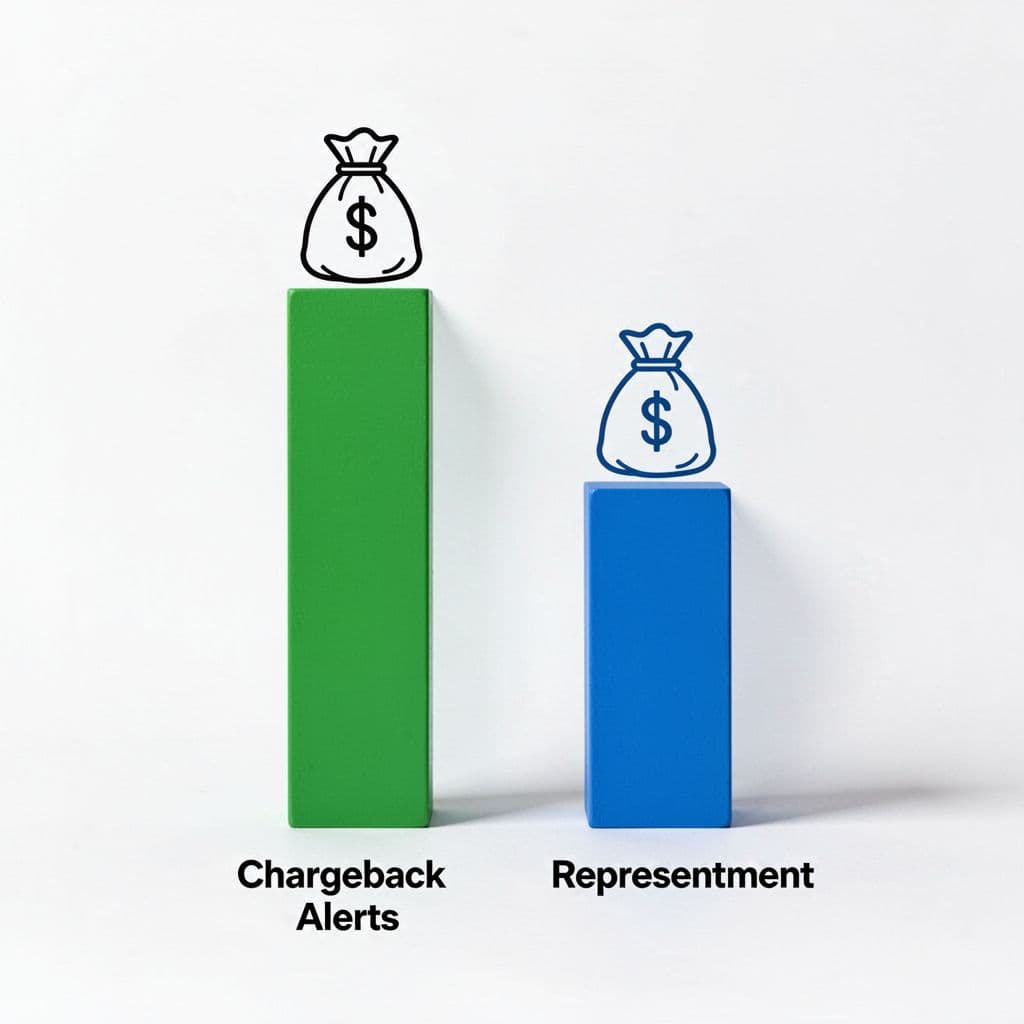
The pattern is clear. Chargeback alerts save more in revenue recovery across most merchant portfolios because they stop the extra costs that come with formal disputes. Representment can save more on a smaller set of cases, usually where the ticket size is high and the compelling evidence is hard to beat.
For SaaS businesses, alerts are especially strong on renewal confusion and unrecognized descriptors. For physical goods merchants, representment becomes more attractive as ticket size and delivery proof go up, particularly in friendly fraud scenarios. This look at chargeback alerts and representment working together makes the same point from another angle. For most businesses, the front of the workflow should be alerts, not representment.
Frequently Asked Questions
What is the key difference between chargeback alerts and representment?
Chargeback alerts arrive before a dispute becomes a formal chargeback, allowing early action like refunds or shipment stops to prevent fees and ratio damage. Representment occurs after the chargeback is filed, requiring evidence to recover funds but after initial costs like fees and labor have already hit. This timing gap makes alerts more revenue-protective in most cases.
When do chargeback alerts save more revenue than representment?
Alerts excel for low- to mid-ticket orders involving customer confusion or friendly fraud, where a quick refund costs less than full dispute handling. They avoid stacking fees, workload, and monitoring program risks. Programs like Ethoca and Verifi RDR, supported by Chargebase, make this prevention fast and automated.
When should merchants choose representment over alerts?
Opt for representment on high-value orders with compelling proof, such as delivery tracking or usage logs for digital goods. It’s ideal for invalid claims like false ‘item not received’ where recovery upside justifies the effort. Even wins here don’t erase all prior costs, so use it selectively after alerts reduce volume.
How does Chargebase fit into chargeback alerts and representment?
Chargebase delivers real-time alerts from dispute signals, automating refunds via rules for Ethoca, CDRN, and RDR to prevent chargebacks upfront. It reduces manual work and ties costs to pay-per-alert pricing. Merchants use it for prevention first, then representment on remaining cases.
Can merchants use both chargeback alerts and representment effectively?
Yes, the best approach layers alerts to stop most disputes early, then applies representment to high-upside cases that slip through. This cuts overall volume, protects revenue across the portfolio, and avoids ratio thresholds. Chargebase streamlines both in one workflow.
Conclusion
Once a dispute becomes a chargeback, recovery gets slower and more expensive. That is why chargeback alerts usually save more revenue for most merchants.
Representment still matters when the claim is invalid, the order value is high, and your proof is solid. Yet the bigger win comes from keeping disputes out of the chargeback system in the first place.
Merchants that prioritize chargeback prevention and dispute management first, then fight the few cases worth contesting, keep more revenue, lower dispute pressure, and spend less time cleaning up avoidable losses.
You might also want to read
Chargeback Management & Software Overview
Dec 31, 2025
Chargeback Analytics & Reporting
Jan 02, 2026
Chargeback Management & Software Overview
Jan 13, 2026
Chargeback Prevention & Fraud Reduction
Jan 26, 2026