
How Self-Serve Cancellations Cut Subscription Chargebacks
May 18, 2026
Many subscription chargebacks start with a customer who wanted to cancel and couldn’t do it fast enough.
That sounds small, but it isn’t. When people hit a dead end, they often go to their bank instead of your support team. The bank route feels faster, and once that happens, you face fees, lost revenue, and a higher dispute rate.
A better cancellation flow won’t save every account, but it does remove one of the most common reasons customers dispute recurring charges in the first place.
Why canceled customers still file chargebacks
Most subscription disputes don’t begin with criminal fraud. They begin with friction.
A customer forgets a renewal date, can’t find the cancel button, or waits too long for support to reply. Then the next charge lands. At that point, the customer no longer thinks about “account management.” They think about stopping the charge by any means possible.
That shift matters. A chargeback is often the fastest exit when a merchant makes cancellation slow, confusing, or dependent on a support ticket. In other words, the bank becomes the off-ramp your product should have provided.
This pattern shows up often in recurring billing businesses. Clear disclosures help, and so do clean billing descriptors, but customers still need a visible way out. Chargeback Gurus’ overview of common subscription dispute causes points to the same root issues: unclear recurring terms, surprise renewals, and hard-to-complete cancellations.
There’s also a timing problem. A support queue runs on business hours, while a cardholder can open a dispute at any time. If your team replies six hours later, the chargeback may already be in motion. Once it reaches the network stage, the cost is higher and the odds of recovery get worse.
For merchants, the damage stacks up quickly:
- You lose the sale or refund it anyway.
- You pay dispute-related costs.
- Your chargeback ratio can rise.
- Your team spends time on preventable cases.
That last point is easy to miss. Every avoidable dispute steals attention from real fraud, failed payments, and retention work. A poor cancel path creates operational drag long after the customer is gone.
Why self-serve cancellation works better than a support-ticket maze
Self-serve cancellation lowers emotion at the exact moment a customer feels trapped.
When people can log in, cancel in a few clicks, and get a confirmation right away, the conflict ends before it turns into a card dispute. They may still churn, but churn is cheaper than a chargeback. It doesn’t come with network scrutiny or penalty fees.
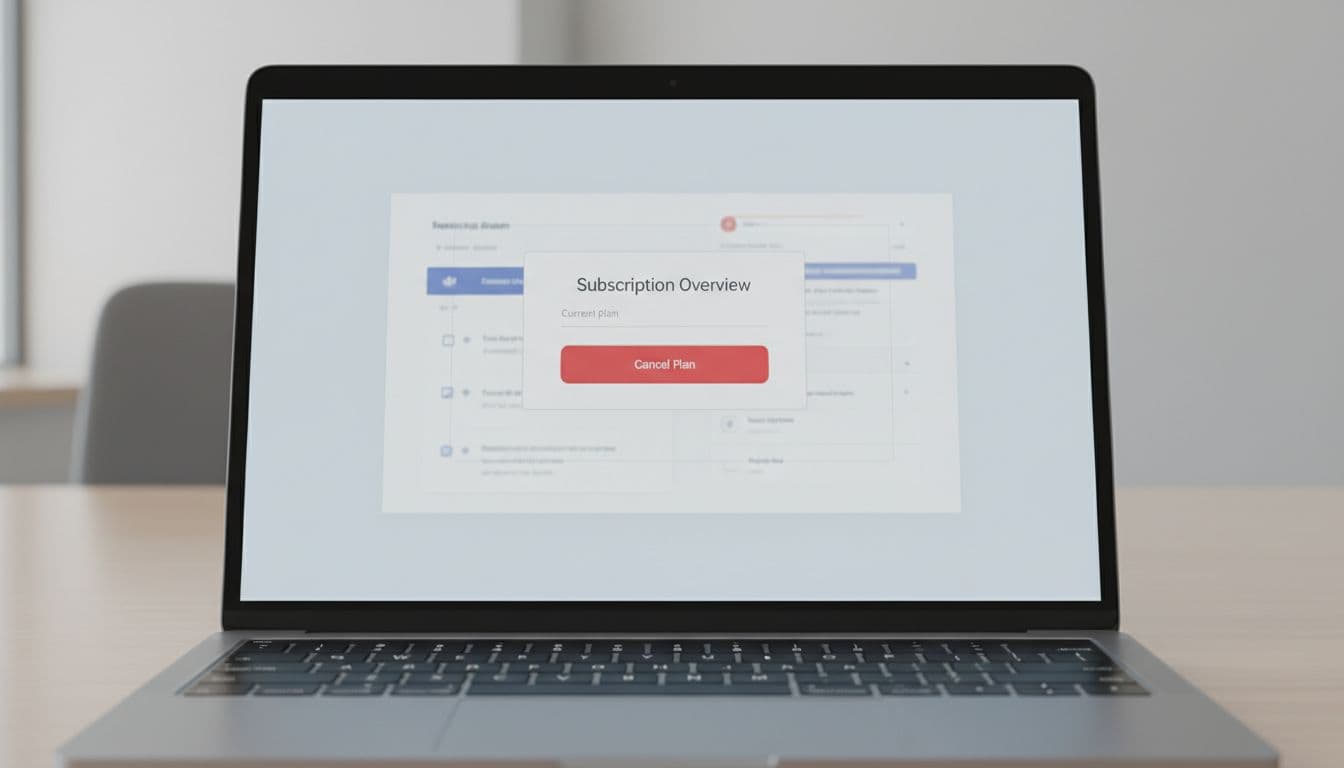
A good self-serve flow also creates records. You can log the request time, the device, the account state, and the exact moment future rebills were stopped. That record becomes useful if the customer later claims they couldn’t cancel or never tried. It also helps your team see where users abandon the flow, which tells you where friction still exists.
If canceling takes longer than disputing, some customers will pick the bank every time.
Renewal timing matters too. A visible cancellation page helps most when customers get a chance to act before the charge posts. This SaaS chargeback guide recommends pre-renewal reminders and immediate, self-serve cancellation because they turn many disputes into standard account closures. That fits what merchants see every day: a reminder sent early enough gives the customer a calm decision window.
The best flows also update access right away or clearly state the end date. That removes the gray area where a customer cancels, still sees the product, then later insists the account stayed active without permission. If your policy allows access until the period ends, say that clearly during cancellation and in the confirmation email.
Self-serve doesn’t mean careless. It means direct. You can still offer save options, pause plans, or downgrade paths. But the real cancel action must stay visible and final. If the user has to hunt, wait, or negotiate, the dispute risk goes up.
What a chargeback-resistant cancellation flow looks like
A strong cancellation flow is easy to find, easy to finish, and easy to prove later.
That sounds simple, yet many teams still hide cancellation under billing menus, add a forced chat step, or make users send an email and wait. Those choices may reduce churn on paper, but they often increase subscription chargebacks in practice.
A cleaner model looks like this:
| Step | Weak experience | Strong experience |
|---|---|---|
| Entry point | Hidden in help docs or account settings | Visible in the billing area |
| Completion | Requires support ticket or phone call | Completed inside the account |
| Timing | Future action is unclear | End date and rebill stop are shown clearly |
| Confirmation | No instant proof | Email and in-app confirmation arrive at once |
| Records | Sparse or manual logs | Timestamped cancellation history is stored |
The takeaway is simple: the stronger flow reduces confusion for the customer and reduces evidence gaps for the merchant.
You should also connect cancellation to billing controls. When the customer cancels, future rebills must stop under the right merchant ID and plan. If your team later refunds an alert, access should be revoked or adjusted at the same time. Chargebase’s guide to managing subscription chargeback timelines explains why fast action matters once an alert arrives. If a dispute is still in the pre-chargeback stage, timing often decides whether it becomes a formal network case.
Confirmation messages need care as well. Keep them short and specific. Show the plan name, the cancellation date, the final service date, and the next billing status. Don’t make customers interpret vague wording like “request received.” That phrase creates doubt, and doubt drives disputes.
Finally, test your own cancel flow like a customer would. Use mobile. Use an older email inbox. Cancel near renewal time. Look for points where the user could think, “I don’t trust this charge will stop.” Every one of those moments is a risk point.
Where Chargebase fits in your subscription stack
Self-serve cancellation removes a major trigger, but it won’t catch everything.
Some customers still dispute a charge after canceling. Others skip your site and go straight to their bank. That’s where chargeback prevention software matters, especially for e-commerce and SaaS companies with recurring billing.
Chargebase is a chargeback prevention software company built for merchants that want fewer disputes and less manual work. It helps detect likely chargebacks before they become full cases, then sends real-time alerts so the merchant can act fast. For many businesses, that means refunding in time, stopping future access, and avoiding a formal dispute altogether.
Its approach is practical. The platform connects to payment providers quickly, automates much of the dispute workflow, and lets merchants set rules for how alerts are handled. Chargebase also uses network programs and alert channels such as Ethoca, RDR, and CDRN, which helps merchants respond before losses pile up. Its pricing model is pay-per-alert, which keeps costs tied to actual prevention activity.
This matters because cancellation alone doesn’t solve process gaps after the bank gets involved. You still need alert handling, refund logic, audit trails, and deadline control. Chargebase covers that side of the job. Its own documentation on how to lower subscription chargeback rates focuses on stopping disputes early, measuring alert outcomes, and avoiding mistakes like duplicate refunds.
Chargebase also supports merchants that need help with issuer-side programs. If your team wants a clearer picture of network tools, its guide on what Verifi means for subscription merchants gives useful context for recurring billing disputes.
The bigger point is this: self-serve cancellation and chargeback prevention software work best together. One reduces customer frustration before a dispute starts. The other helps you catch the cases that still slip through.
Conclusion
The fastest way to cut subscription disputes is often the least dramatic one: make it easy to leave.
When customers can cancel on their own, see the outcome right away, and stop future billing without friction, many potential subscription chargebacks never happen. Add strong records, timely renewal reminders, and a prevention platform like Chargebase, and you give your team a much better chance of keeping disputes low.
A hidden cancel button may protect short-term retention numbers. A clear exit protects revenue, operations, and trust.
You might also want to read
Chargeback Management & Software Overview
Dec 31, 2025
Chargeback Analytics & Reporting
Jan 02, 2026
Chargeback Management & Software Overview
Jan 13, 2026
Chargeback Prevention & Fraud Reduction
Jan 26, 2026