
Build a Chargeback Prevention Workflow Your Support Team Will Actually Use
Apr 18, 2026
Chargebacks rarely appear out of nowhere. Many start with a missed email, a vague billing descriptor, a delayed order, or a customer who could not get help fast enough.
That is why a strong chargeback prevention workflow belongs in support, not only in finance. When agents can spot risk early, take the right action, and log it the same way every time, disputes drop and revenue stays put.
Start with the trigger, owner, and response clock
Before you build rules, define what enters the workflow. Common triggers include issuer alerts, “I don’t recognize this” tickets, delivery complaints, renewal confusion, duplicate charges, and suspicious account activity. If your team needs a refresher on what chargebacks are, start there.
Each trigger needs an owner. Support should handle customer-facing cases first. Risk or payments can review fraud signals and edge cases. Pick one queue, one tag system, and one response-time target. Many alert programs give you hours, not days, so slow handoffs create avoidable losses.
This is not only a support issue. Chargeback management best practices often frame disputes as a sign that billing, fraud checks, fulfillment, and service are out of sync. So your workflow should connect those teams, even if support makes the first move.
Set approval rules early. Can agents refund on the spot? Can they cancel a shipment? Can they pause a renewal? Those answers matter more than any dashboard. If people need manager approval for every case, the clock will beat them.
Map the support workflow before you automate
A good workflow fits on one page. If agents must search five tools and three policy docs, they will miss the window.
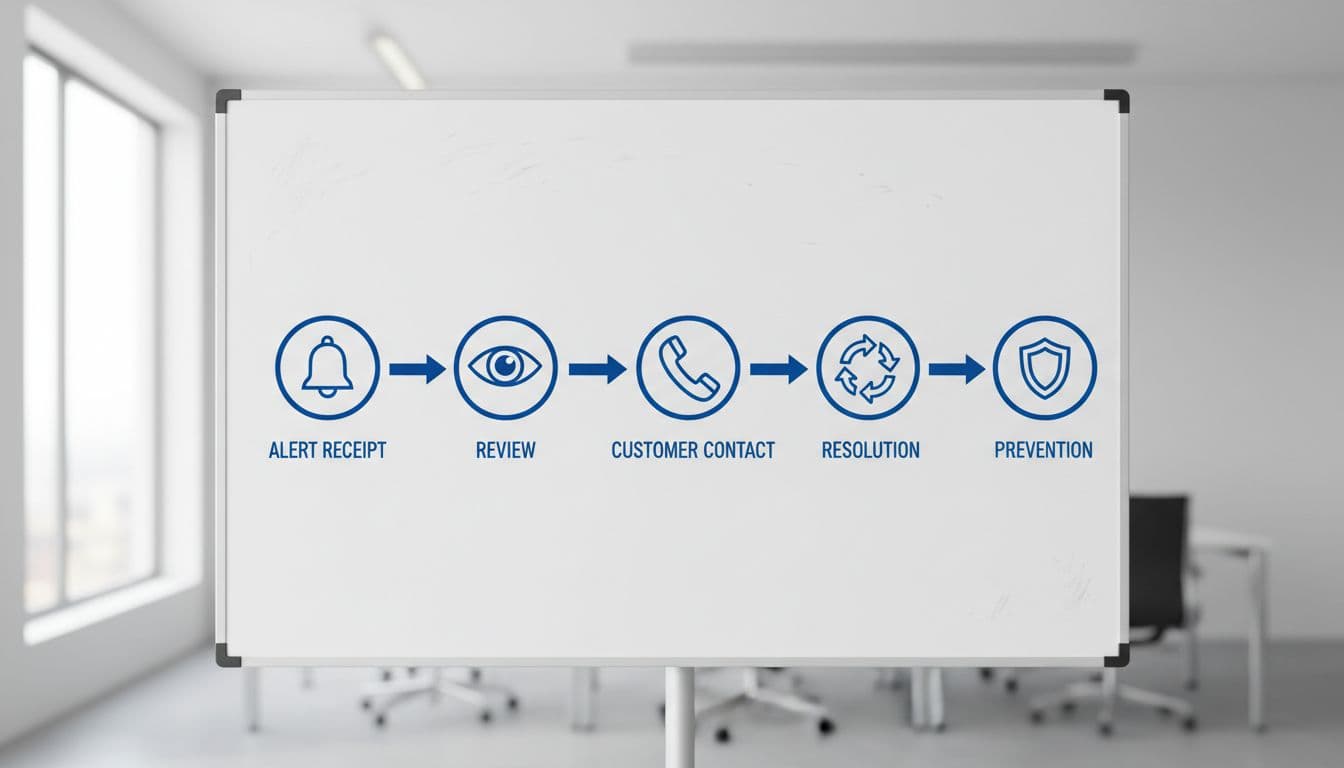
Most teams do well with a simple path:
- Intake the alert or ticket and match it to the order.
- Check the reason, fulfillment status, prior refunds, and account activity.
- Choose the fastest safe action, refund, reship, cancel, pause, or escalate.
- Contact the customer with a clear answer and next step.
- Log the outcome so finance and risk can learn from it.
The real value is in the decision logic. A low-value order with clear non-delivery may deserve an instant refund. A subscription complaint may need a cancelation, a refund check, and a better billing note. A fraud claim should route to risk, but support still needs a script for the customer.
A good workflow removes guesswork before the alert clock runs out.
This matters after checkout too. Webgility’s post-purchase chargeback prevention blueprint points to slow updates, poor refund handling, and weak order communication as common causes of preventable disputes. Because of that, your support team should see shipping data, payment details, and past conversations in one place.
Add alerts and automation without losing control
Manual monitoring breaks on nights, weekends, and product launches. Alerts and automation fill that gap, but only when your rules are clear first.

Chargebase is chargeback prevention software for e-commerce and SaaS businesses that want fewer disputes and less manual work. It connects with payment providers, uses programs such as Ethoca, Verifi CDRN, and RDR, and sends real-time alerts while there is still time to act. It also supports automated rules, so teams can refund or resolve certain cases faster. For most companies that accept card payments, that can reduce the number of formal chargebacks that ever reach the network.
Chargebase can also help support teams stay practical. Its approach is built around early detection, configurable automation rules, and pay-per-alert pricing, so you only pay when an alert is delivered. If you want more context on how Ethoca alerts work, it helps to understand the alert flow before you turn on rules.
Keep the guardrails tight. Auto-refund small orders when the evidence is weak. Pause subscriptions tied to recurring billing complaints. Stop fulfillment when an order has not shipped. At the same time, block double refunds and route high-value cases to review. Automation should speed up easy calls, not hide risky ones.
Train agents to solve the problem, then review misses every week
Tools help, but scripts still matter. Agents need to explain charges in plain language, confirm what happened, and offer the fastest fair fix. Short templates are useful, yet they should still sound human. If a customer feels ignored, the bank becomes their support desk.
Kount’s guidance on customer service and chargeback avoidance matches what many support leaders already see. Reachable service often stops a dispute before it reaches the issuer. So run short drills on your most common cases, especially non-delivery, renewal confusion, and unrecognized charges.
Then review misses every week. Track time to first action, alert save rate, cases that still became chargebacks, and refund errors. When one reason code spikes, update the script, rule, or billing message. A workflow is healthy when agents can follow it without asking for exceptions all day.
Chargebacks often start as service problems with a payment cost attached. The right workflow helps support catch that moment early, choose the right action fast, and leave a clean record behind.
If the process fits on one page, your team will use it. When alerts, rules, and training work together, chargeback prevention stops being a scramble and becomes part of daily support.
You might also want to read
Chargeback Management & Software Overview
Dec 31, 2025
Chargeback Analytics & Reporting
Jan 02, 2026
Chargeback Management & Software Overview
Jan 13, 2026