
Verifi RDR vs CDRN Explained for Merchants in 2026
Mar 14, 2026
A chargeback rarely feels “fair.” It shows up late, pulls money back fast, and drags your team into paperwork. By the time you see it, the customer has already told their bank a story.
That’s why Verifi RDR vs CDRN keeps coming up in 2026. Both tools focus on the short window before a dispute becomes a full chargeback. Get that window right, and you cut fees, protect your ratios, and save hours each week.
This guide explains what each program does, how they differ in real operations, and how merchants typically combine them with chargeback-prevention software like Chargebase.
How RDR and CDRN stop disputes before they become chargebacks
To understand RDR and CDRN, start with the normal dispute path. A customer disputes a card purchase with their issuer, then the card network pushes a formal chargeback through your acquirer and processor. If you need a quick refresher on the flow and why it hurts, see what chargebacks are and why they happen.
RDR and CDRN exist to intercept that moment earlier, when the issuer already has a complaint, but the chargeback has not fully landed in your operational queue. Think of it like catching a package at the sorting center instead of waiting for a failed delivery. You still might “lose” the package (refund), but you avoid the messy return process (chargeback fees, evidence, deadlines).
Both programs are tied to Verifi and the Visa ecosystem. Their shared value is simple: resolve more cases as pre-disputes, so fewer become chargebacks that count against monitoring thresholds.
The practical goal isn’t to “win” every dispute. It’s to stop the ones that cost more to fight than to fix.
In 2026, this matters even more because issuers move faster, customers dispute inside banking apps in seconds, and many businesses run lean support teams. When your team can’t respond quickly, automation and real-time alerts become the difference between “handled today” and “chargeback next week.”
Verifi RDR vs CDRN: automation, timing, and refund control
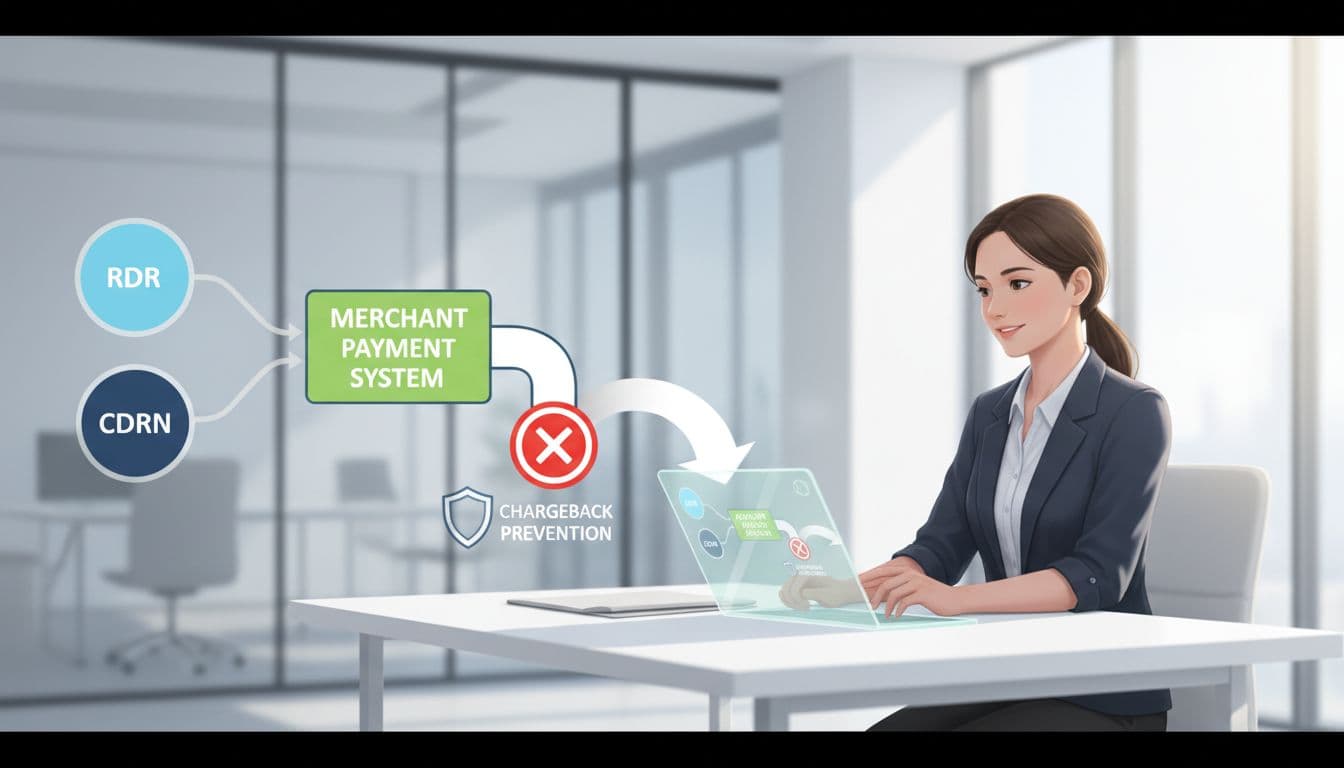
The biggest difference is who makes the decision, and how fast.
RDR (Rapid Dispute Resolution) is rules-driven. You set criteria (for example, refund disputes under a certain amount, or refund specific reason types), and the system resolves eligible cases automatically, usually by issuing a refund. This is built for speed and volume. If you run lots of Visa transactions and you want fewer manual touches, RDR tends to fit.
CDRN (Cardholder Dispute Resolution Network) works more like an alert and decision window. You receive an alert that a cardholder has raised a dispute, then you decide what to do within the allowed timeframe. In practice, that means your team can check order status, look for fraud signals, and choose whether to refund to prevent escalation.
Here’s a quick comparison using merchant-facing operational differences (including example enrollment and pricing details commonly offered through platforms like Chargebase):
| Category | Verifi RDR | Verifi CDRN |
|---|---|---|
| Primary purpose | Auto-resolve eligible pre-disputes | Alert and let the merchant decide |
| Handling style | Automated rules, minimal human review | Manual decision within a response window |
| Refund model | Auto-refund only (when rules match) | Manual refund (you choose to refund or not) |
| Typical setup focus | Define rules and exclusions | Build fast triage and decision playbooks |
| Example enrollment time | Up to ~5 days | Up to ~12 hours |
| Example pricing model | About $15 per alert | About $15 per alert |
| Best fit | High-volume Visa merchants who want speed | Merchants who need more control per case |
The trade-off is straightforward. RDR can save the most labor, but you give up some control because it refunds based on rules. CDRN gives control, but you must be fast and consistent, because the window closes.
For background direct from the ecosystem, Verifi also shares its perspective in The Power of CDRN and RDR. For a merchant-friendly walkthrough, ChargebackHelp’s explainer on RDR and CDRN adds helpful context.
How to pick the right setup in 2026 (and how Chargebase helps)

Most merchants don’t choose RDR or CDRN because disputes don’t arrive in one tidy bucket. Instead, they combine programs based on card mix, risk, and internal bandwidth.
Start with two practical questions:
If you process a lot of Visa volume and your dispute reasons repeat, RDR often pays off because it handles routine cases quickly. On the other hand, if you sell higher-ticket items, ship physical goods, or see more “item not received” claims, CDRN’s manual decision window can protect you from refunding the wrong cases.
Next, look beyond Visa. Mastercard disputes often flow through Ethoca’s alerts network, so many merchants add that layer too. Chargebase breaks this down well in what Ethoca is and how it helps prevent chargebacks.
This is where a platform approach becomes valuable. Chargebase is chargeback-prevention software built for merchants that accept card payments through gateways and fintech providers. It connects to your payment provider quickly (often with no code), then uses official alert networks and pre-dispute programs to help you reduce chargebacks. It’s also built around real-time alerts and automation rules, so your team doesn’t have to babysit inboxes.
In a pay-per-alert model, you only pay when an alert is sent. For example, Chargebase commonly shows pricing like $15 per RDR or CDRN alert and $25 per Ethoca alert, aligning cost to outcomes instead of charging a flat platform fee. It also supports 10 or more automation rules for RDR, which matters when you want guardrails (refund low-dollar digital orders automatically, but route high-risk patterns to review).

One more tip: whichever mix you choose, measure it. Track acceptance rate, time to action, and how many alerts still convert to chargebacks. Also add checks to prevent double refunds. Chargebase’s guide on how to keep chargeback rates low lays out the exact metrics that tend to move the needle.
Gotcha: automation saves time, but sloppy rules can refund too much. Start narrow, then expand once you trust the results.
If you want a deeper operational view of how RDR works in the field, PayCompass’s guide to Rapid Dispute Resolution is a useful companion read.
Conclusion
In 2026, Verifi’s RDR and CDRN both aim at the same target: fewer chargebacks, fewer fees, and fewer fires for your team. The right choice depends on how much automation you want, how quickly you can act, and how much control you need per case. If you want broad coverage with less manual work, combining these programs through a chargeback-prevention platform like Chargebase can turn pre-dispute alerts into a repeatable process instead of a daily scramble.
You might also want to read
Uncategorized
Apr 10, 2026
Uncategorized
Apr 09, 2026
Uncategorized
Apr 08, 2026
Uncategorized
Apr 07, 2026