
Card-Not-Present Fraud Explained for Ecommerce and SaaS Brands
Mar 20, 2026
Online payments run on trust, but that trust is often blind. When nobody swipes a card or stands at a counter, card not present fraud gets more room to work.
If you sell through an online store, subscription platform, app, or billing portal, this threat reaches far beyond fraud losses. It can drain support time, raise dispute rates, and push chargebacks high enough to worry processors. Here’s what it is, how it hits ecommerce and SaaS, and what smart merchants do to stop it early.
What card-not-present fraud actually means
Card-not-present, or CNP, fraud happens when someone uses card details online, in an app, or over the phone without the physical card. That makes web checkouts, recurring billing, and self-serve upgrades common targets.
Unlike in-store fraud, there is no chip read and no face-to-face check. Think of it like approving a buyer behind frosted glass. You can judge signals, but you can’t see the person.
That blind spot is getting costly. Recent chargeback statistics for 2026 show growing pressure on online merchants, while current reporting points to a 20% global jump in CNP fraud in 2023. Analysts also expect online payment fraud losses to climb past $131 billion by 2030.
Fraudsters rarely use one method. Some buy stolen card data in bulk. Others test cards with small purchases, then place larger orders later. Bots can hammer checkout pages at scale, while account takeover lets criminals use a real customer profile with saved payment details.
As a result, many bad orders look normal at first glance. The payment approves, the order ships, and the problem appears only after the real cardholder calls their bank.
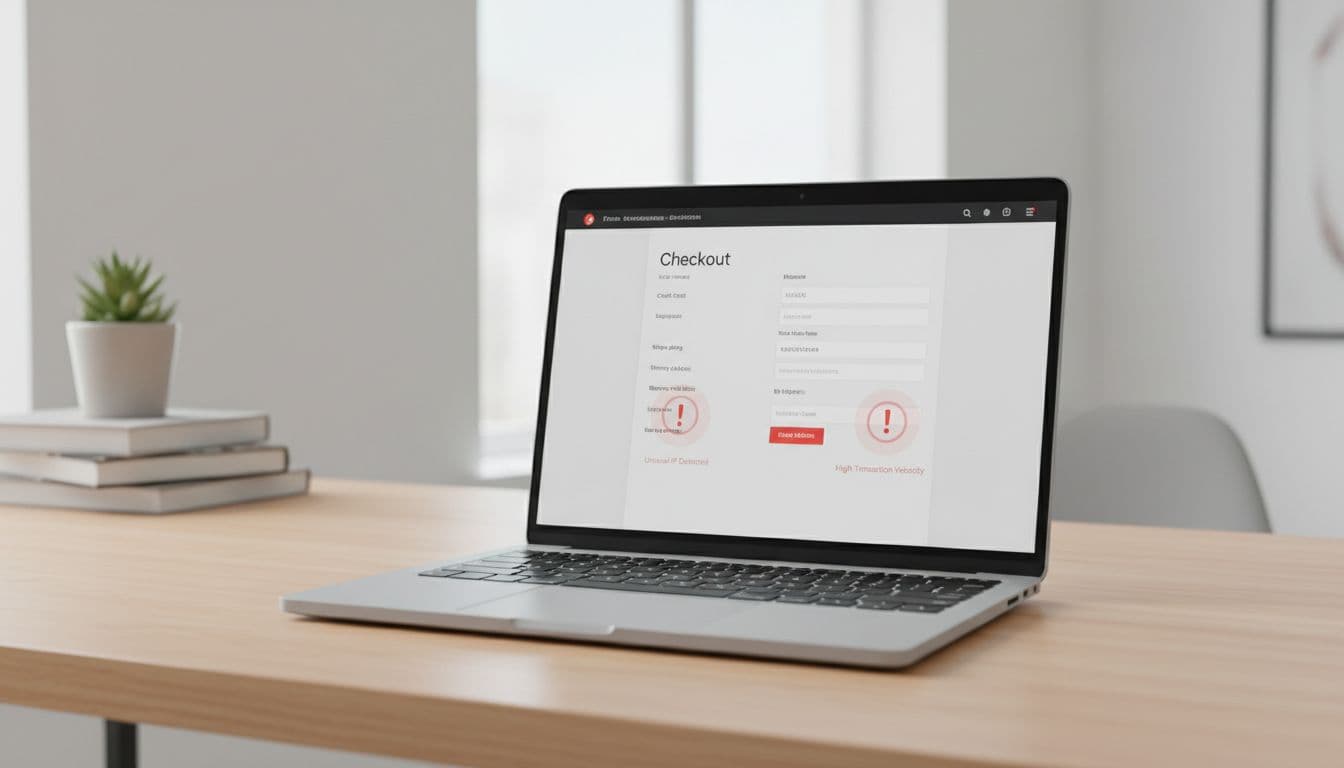
Why ecommerce and SaaS see different versions of the same threat
Ecommerce merchants often see stolen cards used for fast-shipping goods, gift cards, and digital products. In other cases, criminals reroute delivery or exploit weak guest checkout flows. Once the item is gone, the bank dispute follows.
SaaS companies face a different shape of risk. A bad actor can open a trial with stolen payment details, upgrade to a paid plan, use the service hard, and disappear. Account takeovers raise the stakes because a criminal can hijack a real user, buy add-ons, or trigger new invoices from a trusted account.
Still, not every dispute starts with true theft. Many come from first-party misuse, often called friendly fraud. A customer forgets a renewal, doesn’t recognize the billing descriptor, or claims a valid charge was unauthorized. Current industry data ties friendly fraud to 44% of chargebacks, and many merchants report more repeat dispute filers within 60 days.
The bank doesn’t wait for intent to become clear. Once the cardholder disputes the charge, your money can still move out fast.
That’s why CNP fraud and chargebacks are so closely linked. Even when the original issue is confusion, the result can be the same: lost revenue, dispute fees, and tight response deadlines. If your team needs a refresher on the chargeback lifecycle, it’s a good reminder that delay is expensive.
How to reduce card not present fraud before it turns into chargebacks
The best defense is layered. No single rule catches stolen cards, account takeover, and first-party misuse at the same time.
- Screen the checkout: Use AVS, CVV, 3DS where it fits, plus IP, device, and velocity rules to catch mismatches.
- Watch account behavior: Track rapid signups, repeated declines, coupon abuse, password resets, and sudden billing changes.
- Reduce customer confusion: Clear descriptors, order receipts, renewal reminders, and easy cancellation lower preventable disputes.
- Act after the sale: Review post-purchase risk signals, stop shipment when needed, and pause access if the account turns suspicious.
Recent reporting suggests velocity checks can block a large share of multi-account abuse, while device fingerprinting can cut false positives. For a broader look at current tools, this roundup of CNP fraud detection software gives a solid view of the market.
Just as important, merchants need a fast path from alert to action. That’s where Chargebase fits well. Chargebase is a chargeback prevention software platform built for ecommerce and SaaS companies that want fewer disputes, not just better paperwork after the fact. It connects to payment providers in minutes, surfaces real-time alerts while they still matter, and supports more than 10 automation rules for refunds and case handling.
Chargebase also works with networks and programs such as Ethoca, Verifi CDRN, and Visa RDR. That matters because some cases can be stopped while they are still pre-disputes. In practice, that can mean refunding early, pausing fulfillment, or triggering an automated response before the chargeback counts against your ratio. Their guide on how Ethoca Alerts work explains why this early-warning model helps merchants act faster.

Instead of forcing merchants into a heavy pricing model, Chargebase uses pay-per-alert billing. That makes the cost easier to tie to results. For companies under processor pressure, tools like this can help lower your chargeback ratio before disputes pile up.
Final thoughts
Card not present fraud isn’t going away, because online payments always trade convenience for distance. Still, merchants don’t have to treat chargebacks as a normal cost of growth. With better screening, clearer billing, and faster alert handling, prevention becomes a repeatable process. The sooner your team catches risk, the more choices you still have.
You might also want to read
Uncategorized
Apr 10, 2026
Uncategorized
Apr 09, 2026
Uncategorized
Apr 08, 2026
Uncategorized
Apr 07, 2026