
Chargeback Benchmarks for Ecommerce and SaaS in 2026
Apr 22, 2026
A chargeback ratio is a pressure gauge, not a vanity metric. When it starts to climb, margins shrink, support queues grow, and payment partners pay closer attention.
That is why chargeback benchmarks matter in 2026. They show whether your dispute rate is healthy, drifting upward, or getting close to a line that can trigger fees, reviews, or tougher processing terms.
What a healthy chargeback benchmark looks like in 2026
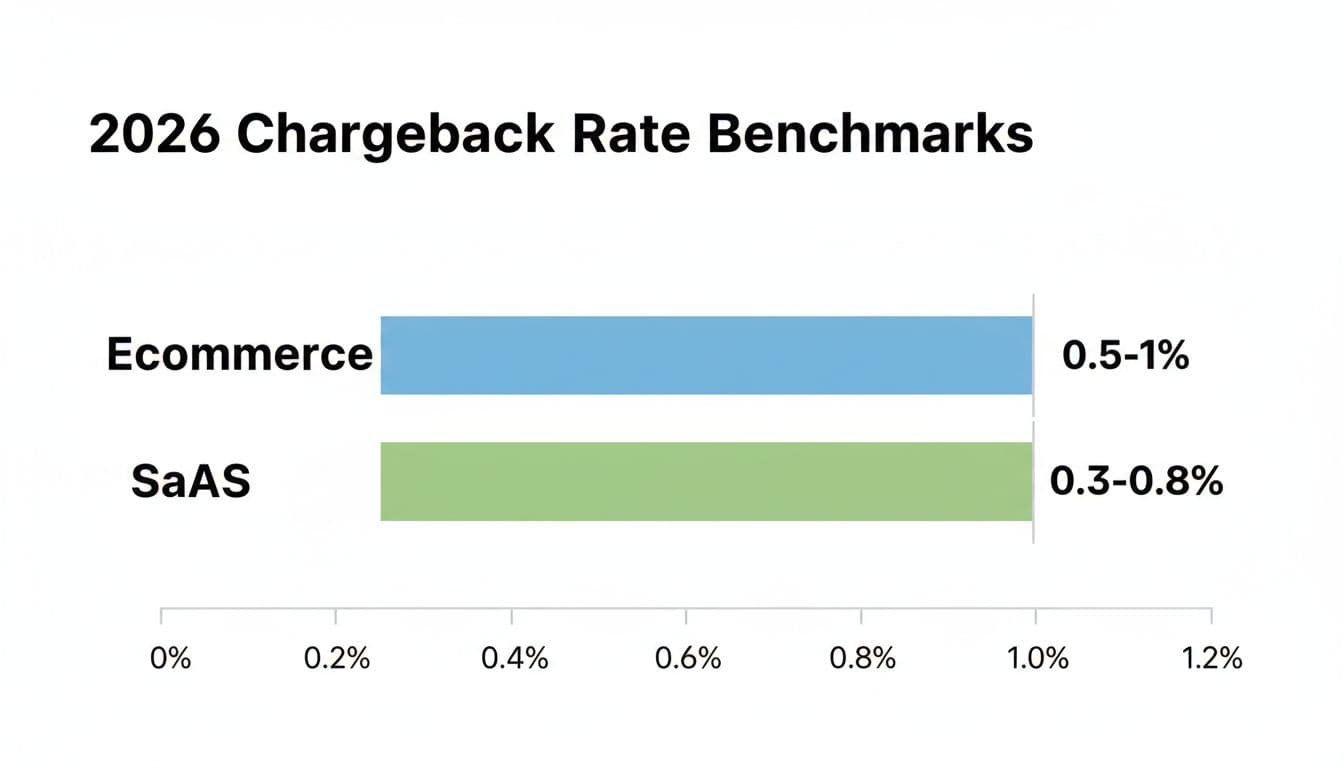
Recent 2026 benchmark summaries from Best for Ecommerce and Chargeback.io point to a clear pattern. Most merchants land somewhere around 0.26% to 0.65% overall. Ecommerce usually runs higher, often around 0.47% to 0.71%. SaaS and other digital businesses often sit near 0.54%, though some subscription-heavy brands drift closer to 0.8%.
That spread makes sense. Both ecommerce and SaaS depend on card-not-present payments, and those transactions carry much more risk than in-person sales. Banks see more fraud claims, more “item not received” complaints, and more cases where a customer simply does not recognize the charge.
This quick table gives a practical reference point:
| Business type | Typical 2026 range | What to watch |
|---|---|---|
| All industries | 0.26% to 0.65% | Good context, but too broad for online sellers |
| Ecommerce | 0.47% to 0.71% | Shipping issues, fraud, return friction |
| SaaS / digital goods | 0.54% to 0.8% | Renewals, unclear descriptors, friendly fraud |
| Risk zone | 1% and up | Processor scrutiny rises fast |
The big takeaway is simple: 1% is a ceiling, not a target. Some payment partners start worrying well before that point. If you operate at 0.85%, you are not “safe.” You are close enough that one bad month, holiday rush, or billing issue can push you over.
If your team needs a quick refresher on what chargebacks are, start there before comparing your numbers. A ratio only helps when everyone reads it the same way.
Why ecommerce and SaaS miss the benchmark for different reasons
Ecommerce misses the benchmark when delivery breaks down or trust drops. Late shipments, split orders, damaged goods, porch theft, and slow refunds all feed disputes. So do confusing billing descriptors. A shopper may not remember your store name, especially if the statement shows a parent company or payment alias.
SaaS has a different pain point. The product arrives instantly, so disputes often come from subscription confusion rather than shipping. A user forgets a trial turned into a paid plan. Another cannot find the cancel button. Someone else sees a renewal, does not recognize the descriptor, and calls the bank before they contact support.
That is why first-party misuse, often called friendly fraud, still makes up a large share of cases in 2026. Many disputes are not stolen-card fraud. They begin with poor recall, buyer’s remorse, family card sharing, or a customer who wants the bank to move faster than support. Merrisk’s 2026 chargeback rate benchmarks and limits echo that same point: a “good” rate is not just about fraud controls, it is also about cleaner operations and better billing communication.
Many chargebacks start with confusion, not crime.
Because of that, the best benchmark analysis is not one number for the whole business. Break it down by product line, subscription plan, country, card brand, and reason code. A SaaS company may look healthy overall while one annual plan creates most of the disputes. An ecommerce brand may blame fraud when the real issue is slow fulfillment on one warehouse route.
How to improve your benchmark before processors step in
The fastest gains usually come from simple fixes. Track chargebacks by segment, not only sitewide. Tighten billing descriptors. Send renewal reminders. Make cancellation easy. When the evidence is weak and the ticket value is low, refund early instead of paying the dispute fee and losing staff time.
Early alerts matter even more. By the time a formal chargeback hits your dashboard, the bank has already started the process. Networks such as Ethoca, RDR, and CDRN create a short window where you can refund or resolve the issue before it becomes a counted chargeback. Chargebase is chargeback prevention software built for ecommerce and SaaS companies that need that speed. It connects to payment providers quickly, uses real-time alerts, and supports automated rules so teams can respond without building a large in-house dispute operation.

For merchants that process a steady flow of online payments, that can make a real difference. Chargebase uses programs like Ethoca, Rapid Dispute Resolution, and CDRN to catch disputes earlier, then routes them through manual or automatic refund paths based on the setup. Its pay-per-alert model also helps companies control cost while they reduce their chargeback count. If you want more background on Ethoca alerts for early chargeback prevention, that is worth a read.
Most teams do not need a perfect dispute win rate. They need fewer disputes reaching the network at all. That is why alert-driven prevention often beats a strategy built only around representment. Chargebase’s own guidance on how to keep chargeback rates low follows that same logic: stop cases early, then use your data to fix the root cause.
The number that matters most is the gap between your current rate and 1%. Keep that gap wide, and you keep more control over revenue, support time, and processor relationships.
For ecommerce and SaaS in 2026, chargeback benchmarks work best as an early warning system. Watch them every month, separate fraud from customer confusion, and solve disputes before they harden into chargebacks.
You might also want to read
Chargeback Management & Software Overview
Dec 31, 2025
Chargeback Analytics & Reporting
Jan 02, 2026
Chargeback Management & Software Overview
Jan 13, 2026