
Visa Claims Resolution Explained for Merchants in 2026
Mar 31, 2026
Visa disputes don’t wait for your team to catch up. By the time one lands, the sale, the product, and your margin may already be at risk.
That’s why visa claims resolution still matters in 2026. If you accept card payments, you need to know when Visa makes the decision for you, when you can push back, and how to stop cases before they become chargebacks.
The good news is that the core rules aren’t a mystery. Once you see the flow, the weak spots get easier to fix.
What Visa Claims Resolution means for merchants today
Visa Claims Resolution, often called VCR, is Visa’s dispute system for handling chargebacks. It isn’t new, but it’s still the framework merchants work inside in 2026. Visa introduced it to reduce manual back-and-forth, trim down reason codes, and move simpler cases faster. Visa’s own merchant explainer on VCR outlines that goal clearly.
The biggest change VCR brought was structure. Instead of a long, messy list of chargeback scenarios, cases now fall into a smaller set of dispute groups, such as fraud, authorization, processing errors, and consumer disputes. That makes the process easier to classify, but it also leaves merchants with less room to argue when Visa already has strong transaction data.
As of March 2026, the basic VCR setup hasn’t been widely replaced or overhauled. Most of the newer chatter in the market has focused on monitoring and risk programs, not a rewrite of VCR itself. If you’re tracking those separate developments, Ravelin’s summary of recent VAMP changes is a useful companion read.
How the VCR process works once a customer files a dispute
When a cardholder contacts their bank, the issuer submits the claim into Visa’s system. From there, VCR routes the case into one of two paths, Allocation or Collaboration.
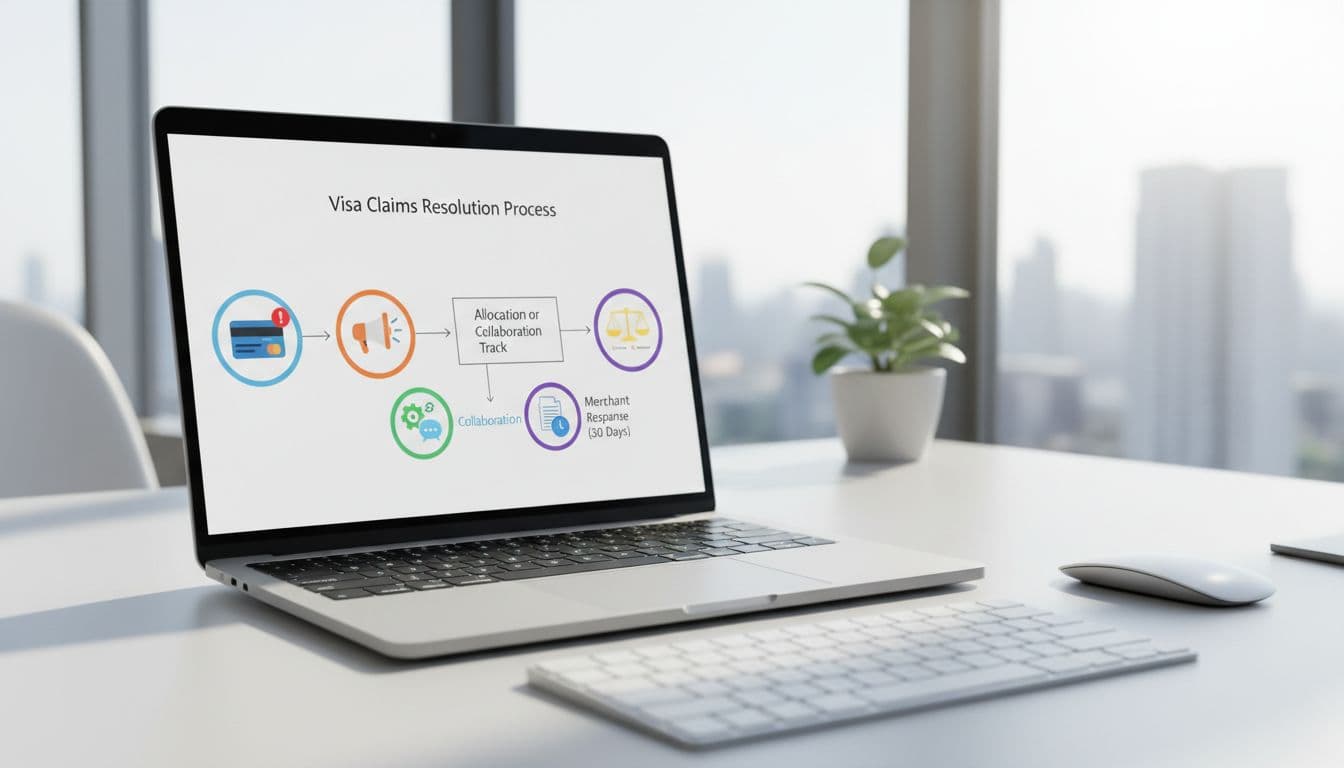
This quick comparison shows why the path matters:
| Track | What happens | Merchant influence |
|---|---|---|
| Allocation | Visa uses available transaction data to assign liability fast, often in fraud and authorization cases | Low |
| Collaboration | The issuer and merchant can exchange evidence and challenge the claim | Higher |
If a case lands in Allocation, the outcome may be based on data already in the system, such as authorization details or fraud indicators. In plain English, that means some disputes are nearly decided before your team even opens the notice.
A slow response hurts twice. You lose time, and you lose the chance to fix the root cause before the next dispute arrives.
For cases that allow merchant input, the response window is typically 30 days. That’s shorter than many teams expect. Support, ops, and finance need a clean handoff, because missing the deadline turns a winnable case into a write-off.
VCR also blocks some invalid disputes earlier in the flow. That’s good news, but it doesn’t remove the need for solid records. If your evidence is scattered across payment, shipping, CRM, and subscription tools, your team will still feel like it’s assembling a puzzle with half the pieces missing.
Where merchants still lose under Visa Claims Resolution
VCR is faster, but fast doesn’t always mean fair for the merchant. Most losses still come from ordinary problems, not dramatic fraud rings.
Unclear billing descriptors are a common culprit. So are recurring charges that customers forgot about, slow shipping, cancellation confusion, and weak proof of delivery. Digital products have their own version of the same problem. You may know the customer logged in and used the service, but if you can’t show that clearly, the bank may side with the cardholder.
Allocation cases are also tough because they rely on data already tied to the transaction. If your authorization data is thin or your fraud controls are weak, there may be little room to recover the sale later.
A good merchant file should include:
- the exact order and billing details
- proof of delivery or service access
- refund and cancellation history
- customer messages tied to the transaction
Teams building a cleaner evidence process can borrow ideas from a current Visa chargeback guide for merchants. The goal isn’t to win every case. It’s to stop losing the easy ones because your records are incomplete.
How to reduce disputes before they ever reach VCR
The cheapest chargeback to fight is the one that never becomes a chargeback. That’s where pre-dispute tools matter.
Chargebase is a chargeback prevention software platform built for e-commerce and SaaS merchants. It connects with a payment provider, flags likely disputes early, and sends real-time alerts so teams can refund or resolve the issue before it hardens into a formal claim. For many companies, that cuts both chargeback volume and the labor that comes with manual case handling.

This matters because Visa claims resolution starts after the customer goes to the bank. Alert networks try to catch the problem before that step. Chargebase supports programs such as Ethoca, Verifi CDRN, and Visa RDR, and it can apply automation rules so your team doesn’t treat every alert like a custom project. If you want a plain-English view of the alert side, this guide on How Ethoca helps merchants prevent disputes is worth reading.
Some merchants also like the pay-per-alert model common in this space. It keeps costs tied to actual dispute activity, which is easier to justify than paying for a bulky system your team barely uses. The bigger point, though, is speed. When a refund, cancelation, or shipment stop happens early enough, the case may never enter the Visa claims queue at all.
Visa claims resolution rewards speed, not cleanup
Merchants do best under VCR when they stop treating disputes as paperwork. They treat them as a signal that something upstream broke, whether that’s billing clarity, fraud screening, delivery proof, or customer support.
If your team still scrambles after the chargeback arrives, fix the process before the next one hits. Better evidence helps, but earlier action helps more.
You might also want to read
Uncategorized
Apr 10, 2026
Uncategorized
Apr 09, 2026
Uncategorized
Apr 08, 2026
Uncategorized
Apr 07, 2026