
Chargeback Representment Time: What Merchants Should Expect
Apr 16, 2026
A chargeback can linger like a slow leak in cash flow. You lose the sale first, then wait weeks or months to learn if you can win it back.
For most merchants, chargeback representment time is longer than expected. Recent 2026 reporting puts the full cycle at about 75 to 120 days, even when the merchant responds on time.
That sounds slow, but much of the delay comes from handoffs, deadlines, and missing proof. Once you know where the time goes, you can control more of it.
The typical chargeback representment timeline
Across recent 2026 sources, the full dispute cycle usually lasts 75 to 120 days from the cardholder’s complaint to the final outcome. Your own window is much tighter. Many merchants get only 20 to 45 days to respond, depending on the card network. Visa, American Express, and Discover often allow 20 days. Mastercard often allows 45.
The official deadline is only part of the story. Acquirers and processors often set earlier internal cutoffs so they have time to review and forward your file. Because of that, a 20-day window can feel like 10 days or less. Weekends, holidays, and queue delays make it even tighter.
The clock usually starts when the chargeback is filed, not when your team first sees it.
That timing matters more now because dispute volumes are rising. When more cases hit your team at once, every slow handoff costs you. For a simple map of the stages, Chargebase’s representment timelines and deadlines is useful. For outside context, this 2026 representment timeline overview and chargeback processing guide for 2026 reach a similar conclusion: merchants should think in months, not days.
This quick table shows where the time usually goes:
| Stage | Typical time |
|---|---|
| Cardholder files dispute | 1 to 10 days after the complaint starts |
| Issuer reviews and creates chargeback | 15 to 45 days |
| Merchant response window | 20 to 45 days |
| Issuer reviews representment | 30 to 45 days |
| Arbitration, if it happens | 1 to 3 months |
The table shows why teams feel squeezed. Your response window is the shortest part, yet it often decides the whole case.
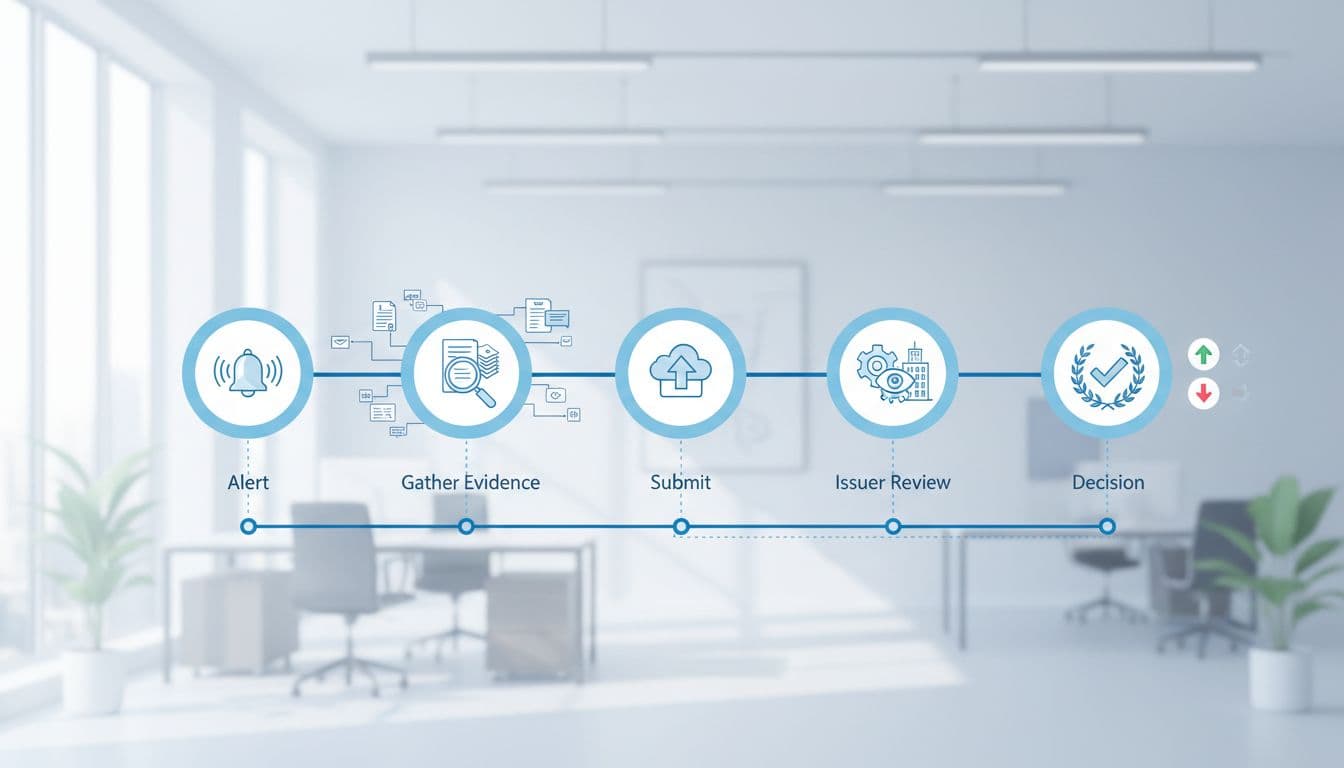
What speeds up or slows down the process
The biggest driver of chargeback representment time is evidence quality. Clean, reason-code-specific proof helps issuers decide faster. Thin files create back-and-forth, or a quick rejection. A receipt alone rarely wins. Banks usually want the full story, such as delivery scans, usage logs, login history, billing terms, refund policy, and customer communication.
The dispute type matters too. Fraud claims may move faster when you have AVS, CVV, 3DS, device data, and IP records. Service or subscription disputes often take longer because the bank compares renewal notices, access logs, cancellation steps, and support messages. Cross-border sales, split shipments, and partial refunds can also stretch the timeline.
Processor formatting rules add another drag. Some portals want PDFs, page limits, or strict file names. If your team learns those rules only after the case arrives, time disappears.

Many merchants also lose time fighting the wrong cases. If the dispute came from clear merchant error, a refund is often cheaper than a weak response. This step-by-step guide to disputing a chargeback is useful because it focuses on proof, not paperwork volume. It also helps to know the difference between refunds and chargebacks, since the best financial choice is not always representment.
How merchants can shorten their own response time
Banks control part of the calendar. You control the rest. The merchants that file fastest usually keep a dispute folder ready before the chargeback lands. That means one place for receipts, order data, tracking scans, customer emails, refund logs, cancel records, and screenshots of the policy shown at checkout.
It also helps to build reason-code playbooks. Fraud disputes need one packet. “Product not received” needs another. Recurring billing disputes need another. When the template already exists, your team spends time checking facts instead of writing each response from scratch.
Ownership matters too. One person should gather evidence. One person should approve it. One system should hold the deadline. If support, operations, and finance all touch the case without a clear lead, the file sits in inboxes while the clock keeps moving.
That is why fast merchants track two clocks, not one. Measure time to first review, then measure time to submit. Those are the parts you can improve.
Reducing the number of cases that reach representment
The fastest dispute is the one that never becomes a chargeback. Early alerts give your team a short window to refund, stop shipment, pause service, or cancel future rebills before the bank creates a formal case. When that works, you save staff time and often protect your chargeback ratio.
Chargebase can help reduce the number of cases that ever reach representment. It is a chargeback prevention software platform built for e-commerce and SaaS companies. The setup is light, with a quick payment-provider connection and no-code onboarding in many cases. From there, the system detects likely disputes, flags them early, and helps merchants act before the case turns into a network chargeback.
The platform uses programs like Ethoca, Verifi CDRN, and RDR, along with shared merchant dispute data, to lower manual work around chargebacks. It automates much of the workflow, keeps the process compliant, and gives merchants more than 10 rules for handling incoming cases. Real-time alerts are sent only when there is still a real chance to stop the chargeback, which helps teams focus on cases they can still affect.
The programs also work a little differently. CDRN can prevent or resolve pre-disputes on supported networks. Ethoca gives broad Mastercard-related alert coverage. RDR uses rules-based automation and auto-refunds for eligible cases. Chargebase publishes simple pay-per-alert pricing, with examples such as $15 for CDRN or RDR and $25 for Ethoca, so costs stay tied to action instead of a large fixed fee. If you want more detail on the alert side, Chargebase’s guide on how Ethoca helps prevent chargebacks adds useful context.
A long dispute cycle is normal. Slow internal prep is optional.
When chargeback representment time keeps stretching, the fix usually starts upstream. Better alerts, clearer billing, and tighter evidence handling often save more money than trying to fight every case to the finish line.
You might also want to read
Chargeback Management & Software Overview
Dec 31, 2025
Chargeback Analytics & Reporting
Jan 02, 2026
Chargeback Management & Software Overview
Jan 13, 2026