
Chargebee Chargeback Prevention for SaaS Teams in 2026
May 01, 2026
A chargeback can wipe out far more than one payment. It can raise your dispute ratio, create support work, and put processor relationships under pressure.
For SaaS teams, the risk is higher because billing is rarely simple. Renewals, plan changes, usage charges, and AI credits can turn a routine invoice into a bank dispute if the customer feels surprised, eroding monthly recurring revenue as disputes rise.
The fix is not one tool or one department. A proactive dispute resolution strategy around Chargebee starts with clean billing operations, then gets much better when you add early dispute alerts before cases turn official.
Key Takeaways
- Chargebacks hit SaaS harder due to recurring billing confusion like renewals, upgrades, and usage charges; clean billing hygiene via Chargebee reduces surprises that trigger disputes.
- Chargebee excels at post-dispute handling with accurate records, automated credits, dunning, and self-serve tools, but reacts after gateway events.
- Chargebase closes the gap with real-time pre-dispute alerts from Ethoca, Verifi, and CDRN, enabling automation to refund, stop access, or resolve before formal chargebacks.
- Use both together in a proactive workflow: clear descriptors and cancellations, auto-refund rules, immediate service stops, and evidence for fighting illegitimate cases.
Why SaaS chargebacks are getting harder in 2026
In 2026, most SaaS chargebacks do not come from obvious fraud alone. They often start with billing confusion. A confusing billing statement triggers a cardholder dispute when a customer forgets a renewal, does not recognize the descriptor, or disputes a usage charge they did not expect.
That makes your subscription business more exposed than one-time sellers. Recurring payments mean the product is intangible, and access may continue even after the cardholder complains. If your dispute rate moves toward 1%, your payment gateway may start watching your account more closely.
Friendly fraud, distinct from criminal fraud, adds another layer. Some users go to the bank first, even when support could solve the issue in minutes. This friendly fraud is common with annual plans, mid-cycle upgrades, prepaid credits, and add-on seats. A lack of subscription cancellation clarity often leads to merchant error.
Current estimates put the combined cost of disputes, fees, and related damage above $117 billion worldwide. So, chargebacks are no longer a side issue for finance. They affect revenue, ops, and customer retention.
For Chargebee chargeback prevention to work, you need both clean billing records and fast alert handling. One without the other leaves gaps.
What Chargebee handles before and after a dispute
For most teams, chargeback management starts with billing hygiene. Chargebee’s automated billing keeps subscriptions, invoices, credits, taxes, and payment status in one place. That matters because support, finance, and rev ops need the same account history when a dispute appears.
Its subscription billing features include dispute-related workflows that sync payment events back to the customer record. In supported setups, Chargebee can update invoice status, create a credit note, and issue a credit note to adjust handling of recurring payments after a dispute. That reduces double refunds, messy accounting, and awkward rebills after a customer has already gone to the bank.
Chargebee also helps earlier than many teams think. Dunning, hosted pages, and self-serve account tools reduce confusion around failed payments and make it easier for customers to update cards, downgrade, or cancel without opening a dispute.
The Chargebee chargeback management docs explain how webhook notifications and Stripe webhooks work with supported payment gateways. That matters because delay is expensive. If your team learns about a dispute too late via a webhook notification, the recovery options shrink fast.
Chargebee works best as the billing system of record. It keeps account data clean and makes dispute handling less chaotic.
Still, Chargebee usually reacts after a gateway event. It does not sit at the issuer-network layer where many pre-disputes first appear.
Where Chargebase closes the gap
That is where Chargebase fits. It is chargeback prevention software built for SaaS and e-commerce companies in the subscription business that want fewer disputes and less manual work. The platform connects to your payment gateway with a no-code setup that takes only a couple of minutes, then monitors for real-time alerts before a formal chargeback lands.
As an official partner of Ethoca and Verifi, Chargebase sits closer to the alert networks than a billing platform does. It works with Ethoca, rapid dispute resolution with Verifi, and CDRN to catch cases while there is still time to refund, stop access, or apply your own rules, helping companies stay out of dispute monitoring programs. For SaaS merchants, that can cut manual effort and reduce chargeback counts at the same time.
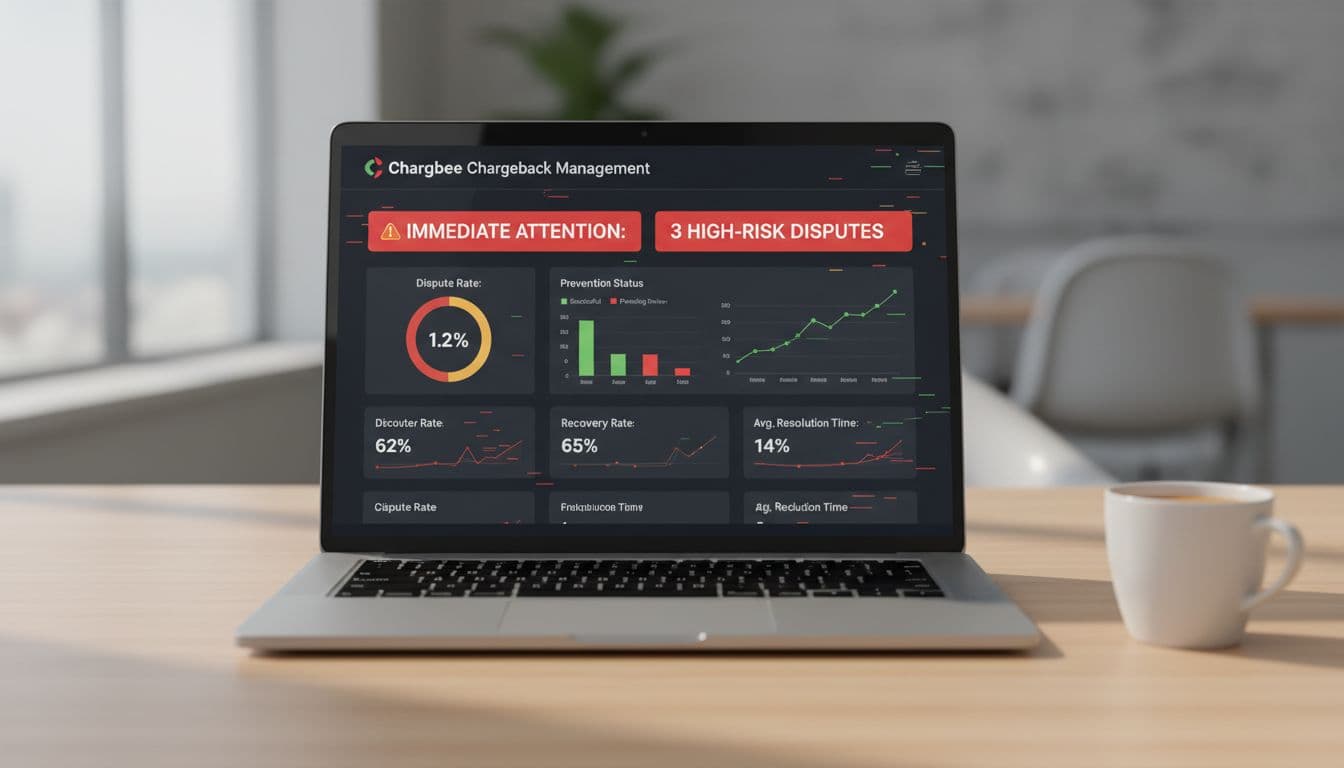
Chargebase also adds chargeback automation that billing systems often lack. Teams can set more than 10 automation rules for RDR, choose refund logic by network, and receive alerts only when there is a real chance to stop the dispute. Its pricing is performance-based too, with public rates starting at $15 per alert for RDR and CDRN, and $25 for Ethoca.
This is the practical split between the two tools:
| Platform | Main job | Best moment |
|---|---|---|
| Chargebee | Billing records, invoices, subscription actions | After gateway events and during account updates |
| Chargebase | Real-time alerts, chargeback automation, payment reversal, dispute interception | Before disputes reach the issuing bank and become official chargebacks |
Used together, they cover different parts of the same problem. Chargebee manages the account state. Chargebase helps reduce the number of chargebacks most companies face in the first place.
A workflow SaaS teams can use right now
Better results in chargeback management come from process, not luck. For SaaS teams handling recurring payments, each team owns one part of the dispute path, so weak handoffs create missed deadlines and duplicate work.
- Clean up billing touchpoints. Use clear plan names, recognizable descriptors, renewal reminders, and an easy subscription cancellation path.
- Decide what deserves an auto-refund per your refund policy. Low-ticket trials, duplicate charges, and fresh renewals often cost more to fight than to reverse.
- Stop service when an alert arrives. If you refund a pre-dispute, send rebill notifications to prevent future disputes, cancel future rebills, and remove access right away.
- Track timing by payment gateway, issuing bank, network, and merchant account. This guide to chargeback lifecycle stages and timelines is useful when you set response windows.
- For illegitimate cardholder disputes, prepare evidence submission to fight back through the representment process.
Measure reasons, not only totals. If unauthorized transactions dominate, bolster fraud detection by fixing descriptors and login notices. If chargeback initiation from canceled recurring payments grows, review renewal emails and cancel flows. If “service not provided” rises, tighten offboarding when access changes. Prioritize fraud detection for unauthorized transactions to minimize disputes.
The biggest mistake is treating chargebacks like a back-office problem. In SaaS, disputes usually start with product access, billing design, or a slow support reply.
Frequently Asked Questions
Why are chargebacks getting harder for SaaS teams in 2026?
Most SaaS chargebacks stem from billing confusion rather than outright fraud, such as forgotten renewals or unexpected usage charges. Recurring payments make disputes more likely since access often continues post-complaint, risking higher dispute ratios and processor scrutiny. Friendly fraud adds pressure, especially with annual plans and unclear cancellations.
How does Chargebee help with chargeback prevention?
Chargebee maintains clean billing records, automates invoices, credits, and subscription actions, syncing data across support and finance teams. Features like dunning, hosted pages, and self-serve portals reduce confusion around payments and cancellations. It handles post-dispute workflows via webhooks but reacts after gateway notifications.
What makes Chargebase a good fit alongside Chargebee?
Chargebase provides real-time alerts from Ethoca, Verifi RDR, and CDRN before disputes become official, allowing SaaS teams to automate refunds or access stops. As an official partner, it offers no-code setup, rule-based automation, and performance pricing starting at $15 per alert. Together, Chargebee manages account state while Chargebase intercepts at the network level.
What workflow should SaaS teams follow for chargebacks?
Start with clear billing touchpoints like recognizable descriptors and easy cancellations, then set auto-refund rules for low-value cases. On alerts, stop service immediately, send rebill notices, and track by gateway and network timelines. Measure dispute reasons to prioritize fixes, fighting only illegitimate ones with evidence.
Conclusion
SaaS teams need fewer billing surprises and faster action when a customer goes to the bank. That is the core of Chargebee chargeback prevention in 2026.
Chargebee helps by keeping subscriptions, invoices, and dispute records accurate. Chargebase adds the early-warning layer through Ethoca, RDR, and CDRN, so more cases end with a refund or account action instead of a formal chargeback.
The strongest setup is simple: keep billing clear, make cancellation easy, and act before chargeback initiation at the network level by card networks. This approach ensures the health of your subscription business.
You might also want to read
Chargeback Management & Software Overview
Dec 31, 2025
Chargeback Analytics & Reporting
Jan 02, 2026
Chargeback Management & Software Overview
Jan 13, 2026