
Merchant Account Reserve Due to Chargebacks Explained
Apr 11, 2026
Missing deposits can feel worse than a bad sales week. One day the money lands, the next day your processor keeps part of it back because your merchant account reserve has changed.
That usually happens when chargebacks start to look like a pattern, not a fluke. Once that risk flag goes up, cash flow gets tighter fast, so it helps to know what the processor is reacting to.
What a merchant account reserve actually means
A merchant account reserve is money your processor or acquiring bank withholds from your payouts. Think of it like a security deposit for card processing.
The processor holds those funds because it may need to cover future chargebacks, refunds, or fees. If you need a quick refresher on what are chargebacks, the basic idea is simple. The customer disputes the payment, and the bank pulls the money back through the card network.
Chargebacks matter because they create risk on both speed and scale. A few disputes may not change anything. A sudden jump, however, can push your business into a higher-risk bucket. Processors often respond by holding part of each payout, raising fees, or adding extra review.
A reserve due to chargebacks is not always a full account freeze. You can often keep taking payments. Still, less money reaches your bank account each day. For many e-commerce and SaaS teams, that’s where the pain shows up first. Ad spend slows, refund timing gets harder, and working capital gets squeezed. For another plain-English explanation, see Brookside Payments’ merchant account reserve breakdown.
How chargebacks turn into reserve holds
The chain is usually short. A customer files a dispute, the issuer starts the chargeback, and your processor debits the amount from you. If that starts happening too often, the processor gets nervous. It sees a bigger chance that future disputes will outpace the cash still in your account.
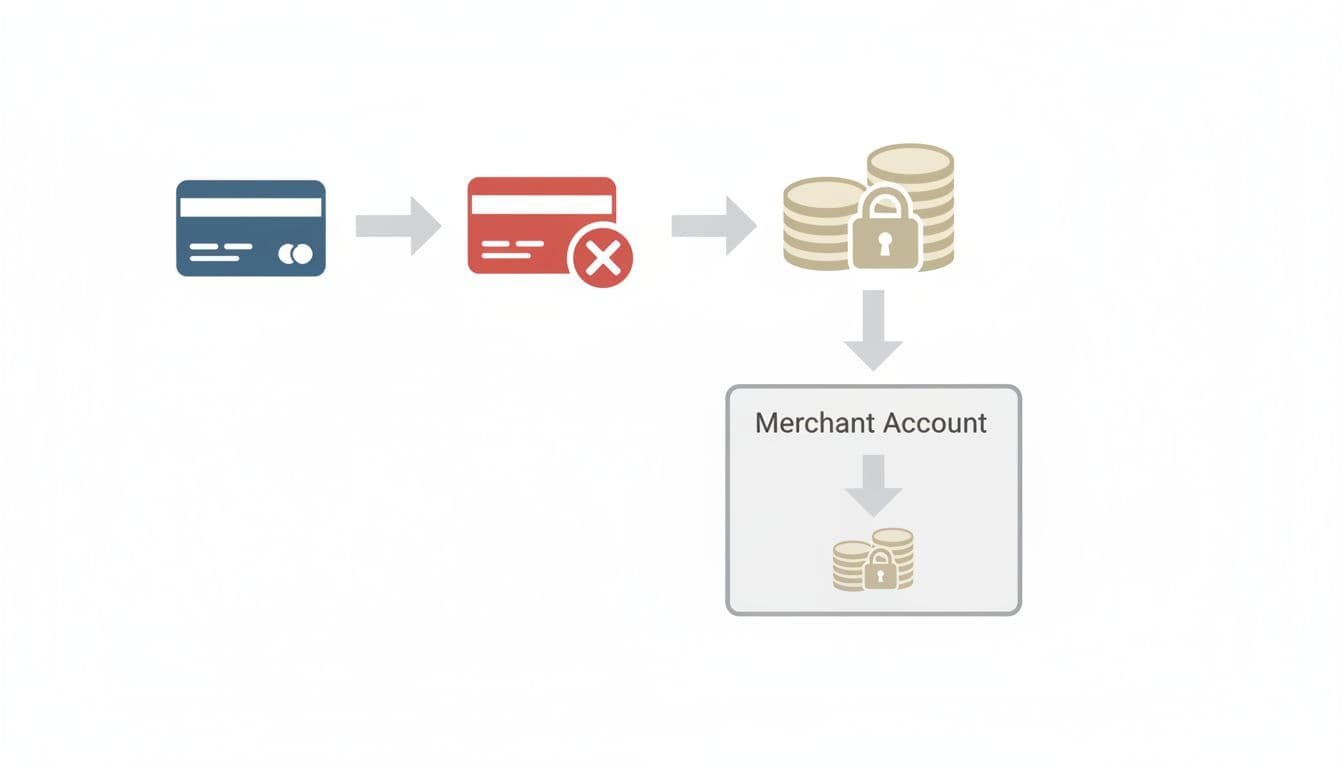
Processors do not look at chargebacks alone. They also watch refund rates, fraud signals, rapid sales growth, recurring billing complaints, and long shipping windows. A business can look healthy on the surface and still trip a reserve if customers keep going to the bank first.
The most common form is a rolling reserve. In that setup, the processor keeps a percentage of each day’s card sales for a set time. It often releases those funds 90 to 180 days later. DepositFix’s explanation of rolling reserves gives a useful outside view of how that works.
If your dispute rate stays high, the reserve may last longer or grow larger. That’s why a reserve is better viewed as a warning light. It tells you the processor thinks future chargebacks are likely enough to justify holding your money now.
Why reserve terms can get worse fast
Processors care about chargebacks because each one can bring several losses at once. You can lose the sale, lose the product or service, pay a fee, and spend staff time fighting the case. If the ratio climbs high enough, card networks can also place merchants into monitoring programs.
Reserves come in a few forms. A rolling reserve holds back a slice of new sales. A capped reserve keeps building until it reaches a fixed amount. Some high-risk accounts start with an upfront reserve before processing even begins. The label changes, but the cash-flow hit feels the same.
That pressure can create a bad loop. When cash is tight, refunds slow down. Support queues get longer, and shipping fixes take longer too. Then more cardholders call their banks. That’s one reason Chargebase’s advice on how to reduce your chargeback ratio focuses on stopping disputes before they become formal chargebacks.
Small operational mistakes often sit behind reserve problems. An unclear billing descriptor, a confusing cancel flow, duplicate charges, or late delivery can all push customers toward a dispute. So if you want the reserve lowered, the work usually starts well before the next call with your processor.
How to reduce a merchant account reserve by reducing disputes
The fastest way to lower a reserve is to lower the risk behind it. Start with the basics: clear billing names, fast support replies, simple refund rules, good delivery updates, and fewer surprises on recurring charges. Stripe’s guide to reducing chargebacks lines up with many of these practical fixes.
Then add early warning tools. Chargebase is chargeback prevention software for e-commerce and SaaS companies. It can help many merchants reduce the number of chargebacks before they hit the network. It connects to payment providers with a no-code setup that can take only a few minutes. Then it uses dispute network data to spot likely chargebacks and sends real-time alerts while there’s still time to act.
Chargebase also supports programs such as Ethoca, Verifi CDRN, and Visa RDR. That matters because some cases can be resolved through alerts or auto-refund rules before they count as chargebacks. The platform uses automation rules, pay-per-alert pricing, and alert-based workflows. That helps teams cut manual work while protecting revenue. If you want the background, here’s a closer look at how Ethoca alerts help merchants avoid chargebacks.

Keep records of the changes you make, then ask your processor for a review after a few stable months. When dispute rates fall and response times improve, a reserve can often be reduced, or removed entirely.
The real issue is risk, not the reserve
A merchant account reserve is usually a symptom, not the root problem. Chargebacks tell your processor that future losses may be coming, so it holds cash back first and asks questions later.
When you cut disputes and fix the customer issues behind them, the reserve becomes easier to unwind. Alert tools that stop cases early can speed that up. Better cash flow usually starts with fewer chargebacks.
You might also want to read
Chargeback Management & Software Overview
Dec 31, 2025
Chargeback Analytics & Reporting
Jan 02, 2026
Chargeback Management & Software Overview
Jan 13, 2026