
How Seasonality Raises Chargeback Risk for Ecommerce Brands
Apr 30, 2026
Your biggest sales month can create your worst dispute month. For many merchants, seasonal chargeback risk shows up after the revenue spike, when refunds, late deliveries, and “I don’t recognize this charge” claims start to pile up.
That pattern matters because chargebacks rarely arrive on the same day the problem begins. A rushed holiday shipment, a gift return, or a loose fraud rule in November can hurt your ratio in January.
Once you treat the calendar like a risk signal, your team can plan earlier and lose less revenue.
Why chargebacks often peak after sales peaks
Seasonal swings in chargeback risk are mostly about delay. A shopper buys during a promo, receives the item later, contacts support even later, and files a dispute after that. Because of those built-in gaps, the dispute spike often lands weeks after the sales spike. The chargeback process timeline varies by network and issuer, which is one reason the pain often shows up after the busy season ends.
Holiday retail is the clearest example. Order volume jumps, first-time shoppers appear, and gift purchases separate the buyer from the final recipient. As a result, customer confusion goes up. So does buyer’s remorse. At the same time, support queues get longer, and a small delay in answering a ticket can push a customer toward their bank instead.

There is also the fraud side. During high-volume periods, merchants sometimes loosen manual review or ship faster to protect conversion. That choice can let more bad orders through. Those disputes usually do not surface right away.
Industry guidance backs up the pattern. Kount’s holiday chargeback FAQ points to holiday gifting and delayed return activity as common reasons disputes rise after major events. Chargebacks911’s holiday season outlook also describes late January through early March as a common post-holiday dispute window.
The main takeaway is simple: sales season and chargeback season are often two different dates on the same calendar.
Seasonal chargeback risk changes by business model
Not every merchant feels this risk in the same month. Seasonal chargeback risk changes with what you sell, how you fulfill, and when customers expect to use the product.
A fashion or electronics brand may feel it around Black Friday, Cyber Monday, and year-end gifting. A subscription business may see a different pattern, such as January renewal confusion, trial-to-paid complaints, or cardholders reviewing statements after holiday spending. Travel, ticketing, and event-driven sellers often see disputes closer to peak booking periods or after service issues hit.
This quick comparison shows how the pattern shifts:
| Seasonal period | Why disputes rise | Common triggers |
|---|---|---|
| Holiday retail | Order spikes stretch support and shipping | Item not received, unrecognized charge, gift returns |
| Back-to-school | New customers buy fast under time pressure | Delivery issues, product mismatch |
| Renewal-heavy months | Customers review budgets and cancel late | Recurring billing, forgot-to-cancel claims |
| Travel or event peaks | Plans change and service dates matter | Cancellation disputes, service complaints |
The lesson is that “seasonal” does not only mean December. It means any period when buyer behavior changes faster than your controls do.
That is why historical averages can mislead teams. If you only watch monthly dispute counts, you miss the pattern under them. It is better to track chargebacks by campaign, fulfillment promise, card brand, and customer type. Then you can see whether the risk comes from new shoppers, promo orders, rebills, or slow delivery windows.
How to lower risk before the busy season starts
The best fix starts before peak demand. First, review your delivery promises. If carriers slow down, your site and post-purchase emails should say so. Next, make refunds easy to find and easy to use. A shopper who can solve the issue with your support team is less likely to call the bank.
Clear billing descriptors matter too. Many seasonal disputes come from simple confusion, especially with gift purchases and family-shared cards. If the card statement name does not match the storefront, expect more “fraud” claims that are not really fraud. Bankful’s holiday chargeback prep guide also highlights how shipping delays, policy confusion, and overstretched teams drive post-holiday disputes.
For merchants that want fewer manual steps, Chargebase is chargeback prevention software built for ecommerce and SaaS brands. It can help most companies reduce the number of chargebacks by catching disputes early, before they become full network chargebacks. The platform connects to payment providers quickly, sends real-time alerts when action still matters, and supports automated rules for handling cases at scale.
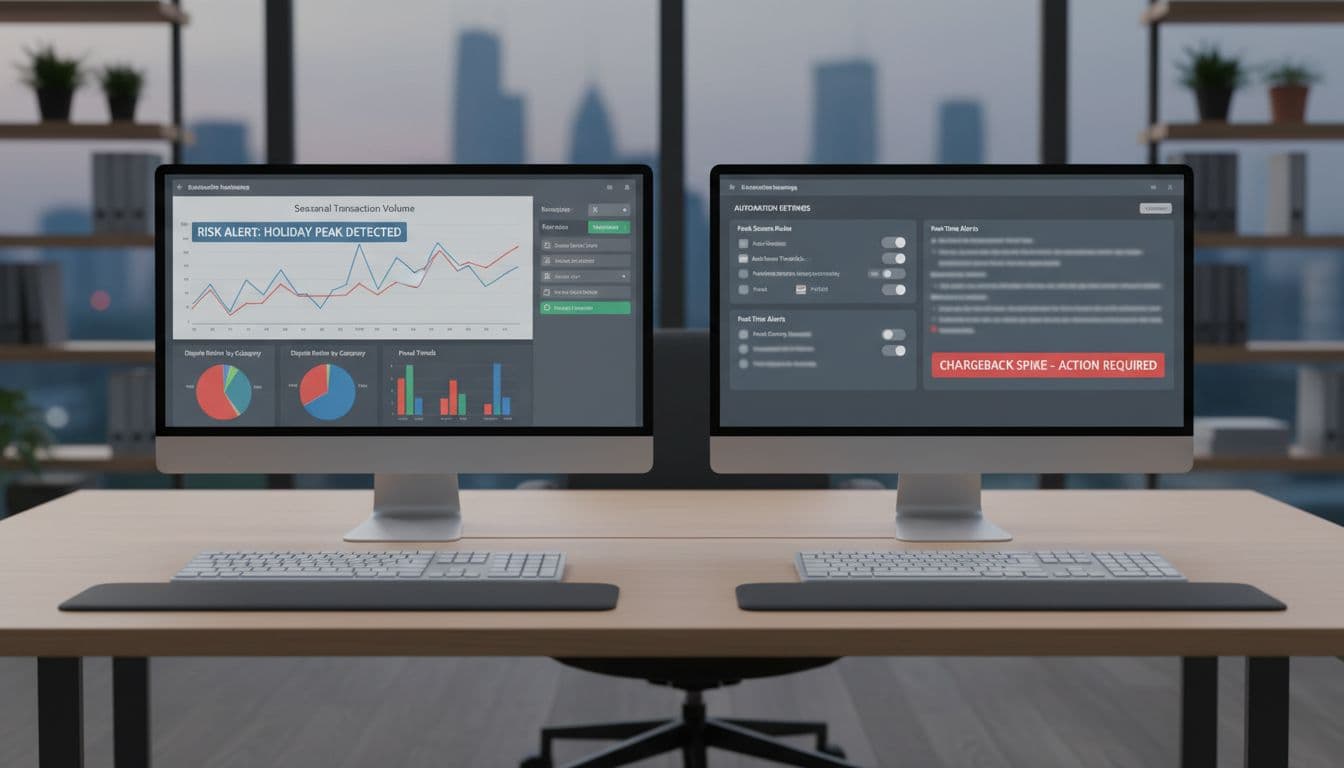
Chargebase also works with programs such as Ethoca, Verifi CDRN, and Rapid Dispute Resolution via Verifi. That matters during seasonal peaks because the earlier you see a dispute signal, the more options you have. In some cases, you can refund fast and stop the chargeback from hitting your ratio. In others, you can automate the response path instead of asking your team to chase every alert by hand.
The practical win is not only fewer disputes. It is lower operational drag during the months when your team is already stretched.
The calendar matters more than most teams think
Chargebacks rise with seasonal pressure, but they usually land after the pressure seems to be over. That lag is why so many brands feel blindsided in January, after a strong December.
The merchants that handle this well do not wait for the dispute count to climb. They adjust policies, support coverage, fraud settings, and early-alert tools before the rush starts. When sales spike, your chargeback plan should already be running.
You might also want to read
Chargeback Management & Software Overview
Dec 31, 2025
Chargeback Analytics & Reporting
Jan 02, 2026
Chargeback Management & Software Overview
Jan 13, 2026
Chargeback Prevention & Fraud Reduction
Jan 26, 2026